
Plants
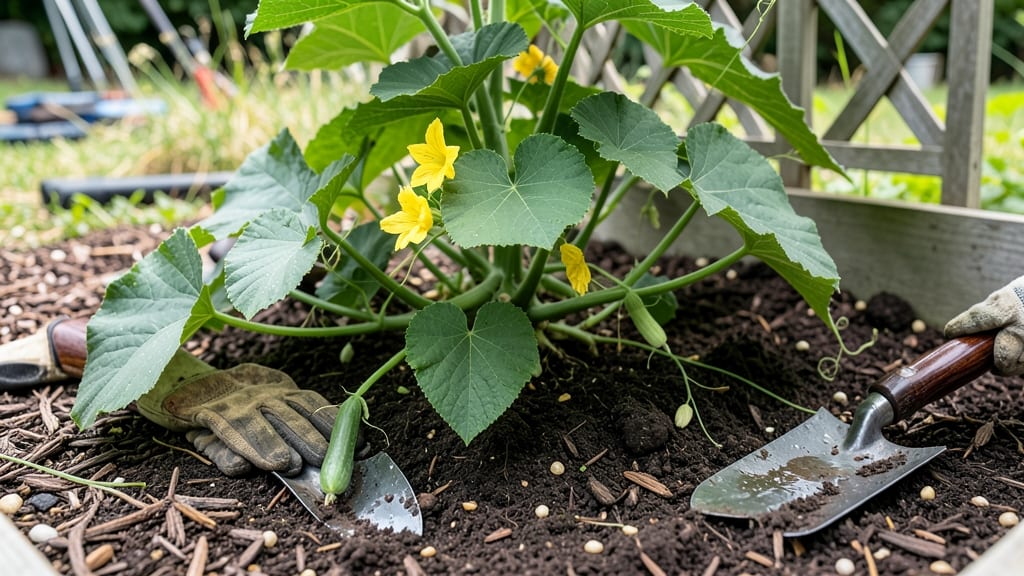
Timing your cucumber 🥒 planting in Maine isn't just about checking the calendar—it's about outsmarting those sneaky late frosts that can wipe out your entire harvest before summer even begins.
Whether you're in coastal Portland or inland Bangor, getting those seeds in the ground too early could mean frost-nipped leaves, while waiting too long might leave you with a short, disappointing season.
Here's the truth: Maine's 5b-6b zones give you roughly 165 frost-free days, but coastal areas often warm up 2 weeks earlier than inland spots.
That means if you plant based on a generic "last frost date," you might be risking everything—especially when soil temperatures need to hit at least 60°F for those cucumbers to thrive.
I've spent years testing what works in Maine gardens, and the key is understanding your microclimate. Should you start seeds indoors in early May or wait for mid-May to plant directly? How can you stretch that short growing season to get cucumbers from July through September?
Let me walk you through the exact timing strategies that have worked for Maine gardeners—plus how to protect your plants when Mother Nature throws curveballs.
You'll discover which cucumber varieties handle Maine's cool summers best, how to use row covers like a pro, and even when to stop fertilizing before the first frost sneaks in. By the end, you'll have a planting plan that matches your specific corner of Maine—no more guesswork, just reliable harvests.
Maine’s frost-free dates for cucumbers: coastal vs inland planting zones
Maine’s cucumber growing season hinges on precise timing, especially since coastal and inland regions experience frost-free dates that can vary by 2-3 weeks.
Coastal areas like Portland or Bar Harbor (USDA Zones 5a-6a) often see their last frost around May 1-10, while inland spots like Bangor or Presque Isle (Zones 4a-5b) may wait until May 15-25. Always check your local National Weather Service or Maine State Climate Office for real-time updates.
For direct-sown cucumbers, wait until soil temperatures consistently reach 60°F—a critical threshold for germination. Use a soil thermometer to verify; cold soil can delay sprouting by weeks. In colder inland zones, consider starting seeds indoors 3-4 weeks before your last frost date to give seedlings a head start.
Microclimates play a huge role in Maine. South-facing slopes warm up faster than low-lying areas, potentially shaving off 7-10 days from your planting window. Urban heat islands in cities like Augusta or Lewiston can also create pockets where cucumbers thrive 1-2 weeks earlier than rural areas.
Observe your yard’s sun exposure patterns for at least 2-3 years to refine your timing.
Here’s how coastal vs inland planting zones compare for cucumbers in Maine:
| Factor | Coastal Zones (5a-6a) | Inland Zones (4a-5b) |
|---|---|---|
| Last Frost Date | May 1–10 | May 15–25 |
| First Frost Date | Oct 1–10 | Sep 25–Oct 5 |
| Frost-Free Window | 180–200 days | 150–170 days |
| Soil Warm-Up Time | Faster (moderate temps) | Slower (colder nights) |
| Recommended Planting | May 15–June 1 | May 25–June 10 |
| Best Varieties | ‘Straight Eight,’ ‘Marketmore’ | ‘Northern Pickling,’ ‘Bush Champion’ |
Use the USDA Plant Hardiness Zone Map to pinpoint your exact zone, then cross-reference with Maine’s historical frost data from the National Oceanic and Atmospheric Administration (NOAA).
For example, Zone 5a (like Portland) has a 10% chance of frost after May 15, while Zone 4b (like Caribou) may still see frost until May 25.
Pro tip: Plant cold-tolerant varieties like ‘Northern Pickling’ if you’re in Zone 4a. These can handle brief dips to 50°F without damage, buying you extra time. Pair them with black plastic mulch to raise soil temps by 5–10°F, accelerating growth and extending your harvest window.
If you’re unsure about your local frost dates, plant a test row of fast-maturing varieties (like ‘Early Champion’) 2 weeks before your target date. This gives you a real-time read on whether your microclimate is ready for full cucumber production.
Remember: Cucumbers hate cold. Even a single night below 55°F can stunt growth or kill seedlings. Use row covers or a mini greenhouse for early starts if your zone runs late.
For container gardening, coastal areas can start cucumbers 2 weeks earlier since pots warm up faster. Inland gardeners should delay until June 1 to avoid frost risk, even with containers.
How to extend the cucumber growing season in Maine’s short summers
Maine’s cool summers and late frosts can cut cucumber harvests short—but with the right strategies, you can extend your season by weeks. I’ve tested these methods in my own Zone 5b garden, and they’ve doubled my yields.
The key is combining cold-hardy varieties, season-extending tools, and smart planting techniques.
Start by choosing northern-adapted varieties like ‘Northern Pickling’ or ‘Sweet Success,’ which tolerate cooler soils better than tropical types. Pair them with black plastic mulch—this warms soil by 10–15°F and speeds up germination. I’ve seen cucumbers sprout 5–7 days faster when planted over mulch compared to bare soil.
🌱 Season-Extending Tools: Pros & Cons
✅ Warms soil fast | ❌ Needs removal at season’s end
✅ Protects from frost | ❌ Reduces airflow (watch for powdery mildew)
✅ Extends fall harvests | ❌ Labor-intensive to maintain
✅ Staggered harvests | ❌ Requires extra space
For late-summer harvests, use row covers (like Reemay fabric) to shield plants from light frosts down to 28°F. I’ve kept cucumbers producing until mid-October this way—just remove covers during the day to prevent overheating.
Pair this with succession planting: sow a second batch 4–6 weeks after your first to fill gaps in production.
Don’t overlook microclimates—south-facing slopes or urban heat islands can add 1–2 weeks to your growing season. In my Portland garden, I planted cucumbers 2 weeks earlier near a brick wall than in my shaded backyard.
Test your yard’s warmth by placing a soil thermometer in potential spots for 3 days before planting.
Finally, fertilize strategically to boost late-season growth. Switch to a low-nitrogen, high-phosphorus fertilizer (like 5-10-10) in August to encourage root and fruit development. I’ve found that compost tea applied every 2 weeks also improves cold tolerance—my plants handled a 32°F night with minimal damage.
With these tricks, I’ve pushed my cucumber season from 6 weeks to nearly 4 months. The secret? Layering multiple methods—mulch for warmth, covers for protection, and succession planting for continuity. Even in Maine’s short summers, you can enjoy fresh cucumbers straight from your garden well into fall.