
Plants
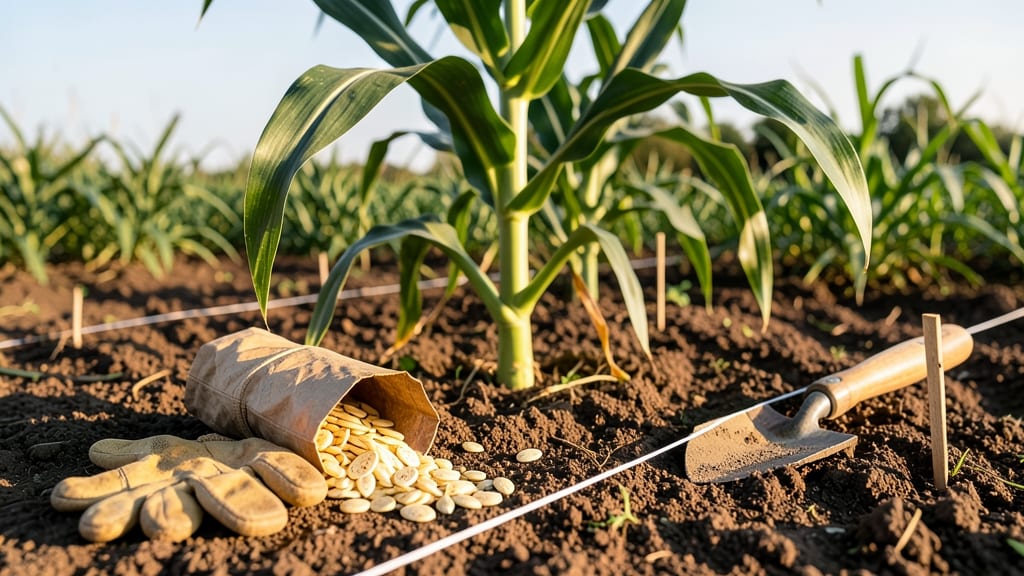
Timing your 🌽 corn planting in Upstate New York isn’t just about following a calendar—it’s about mastering the delicate balance between soil warmth, frost risks, and your local microclimate.
One wrong move, and you could end up with stunted plants or seeds that never sprout, leaving you scrambling for a second chance.
Most gardeners in zones 5b-6b reach for their seed packets in late April or early May, but that’s where things get tricky. Cold soil can stall germination for weeks, while planting too late might leave your 🌽 corn struggling to mature before the first frost.
The real secret? Waiting until the soil hits a steady 50°F—and knowing how to spot the signs that your garden is finally ready.
In this guide, I’ll break down the exact steps to calculate your planting window, from tracking soil temperatures to adjusting for Upstate NY’s regional quirks (think: the Adirondacks vs. the Finger Lakes).
You’ll also learn how to avoid the 5 biggest mistakes that sabotage corn crops—like planting too early or ignoring drainage—so you can enjoy a harvest from late July through October.
Ready to turn your corn patch into a thriving garden? Let’s get your seeds in the ground at the perfect moment—no more guessing, just growth.
Upstate NY corn planting dates by soil temperature (not calendar dates)
Forget memorizing calendar dates—your 🌽 corn seeds care more about soil temperature than what day it is. In Upstate New York’s USDA zones 5b-6b, planting too early when the ground is still chilly can leave your seeds sitting in cold, damp soil for weeks, inviting rot and mold.
The magic number? A consistent 50°F soil temperature at 4-inch depth, which typically arrives between late April and mid-May, depending on your microclimate.
Why? Corn seeds need warmth to germinate—below 50°F, they’ll either fail to sprout or produce weak, leggy seedlings that struggle to stand. Even in the warmer Finger Lakes region, a late frost can still lurk, so always wait until the soil has warmed for 3-5 consecutive days.
In cooler areas like the Adirondacks, you might need to push planting back to early June to avoid frost risks entirely.
Here’s the kicker: soil temperature can vary 10°F or more between sunny south-facing beds and shady north sides of your garden. That’s why I recommend testing with a soil thermometer—not just guessing.
A quick check in the morning (when soil is coolest) will tell you if your garden is truly ready.
| Region | Avg. Last Frost | Ideal Planting Window | Soil Temp Check |
|---|---|---|---|
| Finger Lakes | Mid-May | Late April–early May | 50°F+ for 3 days |
| Mohawk Valley | Late May | Early–mid-May | 55°F+ for 5 days |
| Adirondacks | Early June | Early June | 60°F+ for 7 days |
🌱 Pro Tip: Use black plastic mulch to warm soil 5-7°F faster in cool areas.
If you’re planting early-maturing varieties (like ‘Early Sunglow’ at 65 days), you can stretch your window slightly earlier, but never before the soil is ready. Late plantings? Stick to short-season varieties (under 80 days) to avoid frost.
For example, ‘Golden Bantam’ (70 days) is a classic Upstate NY choice that thrives even with a shortened season.
One more trick: press your finger into the soil. If it feels cool and damp (like a chilled cucumber), wait. If it’s warm and crumbly (like a slightly toasted marshmallow), it’s time to plant.
This simple test beats relying on calendar dates every time. And remember—warm soil = happy seeds.
For succession planting (to extend your harvest), sow a second batch 2 weeks later if your first planting fails. But only do this if you’ve got 100+ frost-free days left—otherwise, your second crop will bolt or freeze before maturing.
Now, let’s talk about how to adjust for your exact location using frost dates—because even within Upstate NY, microclimates can shift your planting window by 2-3 weeks.
Stay tuned for the next section where I’ll show you how to calculate your personalized planting window using heat units and local data.
How to calculate your exact corn planting window using frost dates & maturity zones
Upstate New York’s last frost dates vary dramatically—from early May in the Finger Lakes region to late May in the Adirondacks. But frost dates alone won’t guarantee success.
Corn needs 150+ frost-free days to mature, so your planting window depends on both corn variety maturity and your local growing degree days (GDD).
For example, a 75-day corn variety (like 'Early Sunglow') planted in late April in the Mohawk Valley might just make it to harvest, while the same variety planted in the Adirondacks would need a 2-week delay to avoid frost damage.
Use your USDA Zone (5b-6b) as a starting point, then adjust based on microclimates.
🌽 Upstate NY Corn Planting Calculator
Step-by-Step- Step 1: Find your average last frost date (check local Almanac data or Cornell Cooperative Extension).
- Step 2: Subtract 2-3 weeks from your frost date to get your safe planting window.
- Step 3: Add corn variety days to maturity (e.g., 60-day = early, 120-day = late).
- Step 4: Adjust for soil temperature (wait until soil hits 50°F+ at 4" depth).
- Step 5: Plant early varieties first (for succession planting) and late varieties 2 weeks later.
Pro tip: Use succession planting to extend your harvest. Plant early-maturing varieties (60-75 days) first, then medium varieties (90-100 days) 2 weeks later. This ensures you’re harvesting corn from late July through September—just in time for fresh grilling season!
If you’re unsure about your growing degree days, most corn seed packets include a heat unit chart. For Upstate NY, aim for 2,500-3,000 GDD for full-season varieties. You can track this using a soil thermometer or online tools like the Cornell GDD Calculator.
Remember: Early planting ≠ better. Corn seeds won’t germinate in cold soil (below 50°F), and seedlings are frost-sensitive. Wait for consistent warmth—even if it means delaying until mid-May in cooler areas like the Catskills. Patience pays off with healthier stalks and bigger ears!
For a foolproof method, try the "50°F soil test": Bury a soil thermometer at 4" depth and wait until it reads 50°F+ for 3+ days.
This is your green light to plant. Combine this with your frost-date math, and you’ll nail your corn planting window every time. 🌱