
Trees
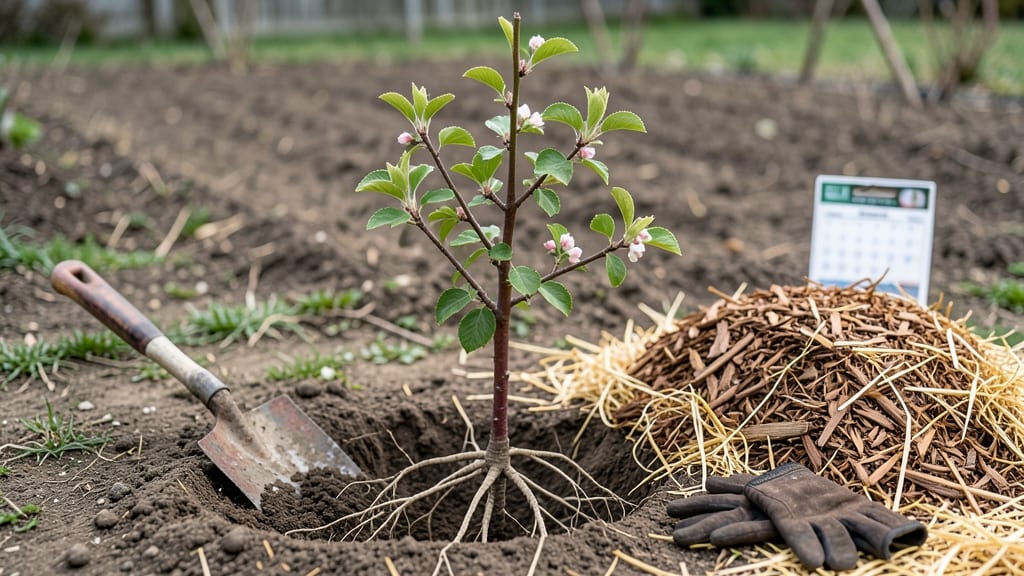
Timing your Apple Tree 🍎 planting in Zone 5 isn't just about the calendar—it's about catching that sweet spot between frost and soil warmth that sets young roots up for success.
Plant too early, and you risk frost damage; too late, and your tree might struggle to establish before winter hits.
Most gardeners in Zone 5a-5b know early spring (after May 15) is ideal, but did you know soil temperature is the real secret? A simple test—like checking if the ground feels warm enough to hold a potato for 10 seconds—can save you from costly mistakes.
In this guide, I'll break down the exact planting window, soil prep tips, and even which cold-hardy varieties handle late starts best. Whether you're planting bare-root saplings or container-grown trees, you'll learn how to give your orchard the best possible start.
Skip the guesswork and plant with confidence—your future harvest depends on getting it right the first time.
Optimal planting window for apple trees in Zone 5 based on soil temperature
In Zone 5, timing your apple tree planting is critical—planting too early risks frost damage, while waiting too long delays root establishment. The best window spans from late April to early May, when soil temperatures consistently reach 50-60°F at 4 inches deep.
This aligns with average last frost dates (around May 15), but always verify local frost predictions since Zone 5 includes sub-zones 5a (colder) and 5b (warmer).
For example, Chicago (Zone 5b) typically sees safe planting by mid-April, while Pittsburgh (Zone 5a) may wait until early May. Northern Zone 5 areas like Duluth, MN often face 2-3 weeks later frost risks.
Use your local USDA Plant Hardiness Zone Map and Almanac frost dates to fine-tune your schedule.
Fall planting is also viable in Zone 5, but only for bare-root trees planted 6-8 weeks before first frost (typically September-October). Container-grown trees can handle fall planting better but require extra mulching to insulate roots. Avoid fall planting if your region experiences early hard frosts before roots can establish.
Soil temperature is your most reliable guide, not just calendar dates. A soil thermometer ($10-$15) inserted 4 inches deep will show when roots can actively grow.
If temperatures dip below 50°F, roots stay dormant, and your tree won’t thrive. Container-grown trees adapt slightly better to cooler soil but still need warmer conditions for optimal growth.
Pro tip: Test your soil 2-3 days before planting. If it’s too cold, delay by a week or use black plastic mulch to warm the soil faster.
If it’s too warm (above 70°F), your tree may transpire too quickly, leading to stress. Aim for that 50-60°F sweet spot for best results.
🌱
| Factor | Zone 5a (Colder) | Zone 5b (Warmer) | Action |
|---|---|---|---|
| Soil Temperature | 50-60°F (late May) | 50-60°F (mid-April) | Wait for consistent warmth |
| Last Frost Date | May 22 | May 15 | Plant 2 weeks after |
| Fall Planting Window | September 1-15 | September 15-October 1 | Use mulch for insulation |
| Soil Prep Time | 4-6 weeks before planting | 3-4 weeks before planting | Amend with compost |
| Tree Type | Bare-root preferred | Bare-root or container | Avoid container in extreme cold |
Once you’ve confirmed your soil temperature and frost dates, focus on planting depth. The graft union (visible bump on the trunk) should sit 2-3 inches above soil level to prevent rot.
In Zone 5, mounding soil slightly around the base helps insulate roots during late frosts that can sneak in even after your main frost date.
After planting, water deeply (10-20 gallons) to settle soil and eliminate air pockets. Apply 2-3 inches of mulch (straw or wood chips) to retain moisture and regulate temperature.
In Zone 5a, add an extra inch of mulch for winter protection. Avoid piling mulch against the trunk to prevent rot.
Monitor your tree’s progress by checking for new leaf growth within 3-4 weeks. If leaves appear yellow or wilted, it may indicate root stress from planting too early or poor soil conditions.
Adjust watering and mulching as needed. With the right timing, your apple tree will establish strong roots and reward you with fruit in 3-5 years.
🌳
Optimal planting window for apple trees in Zone 5 based on soil temperature
In Zone 5, the best time to plant apple trees is when soil temperatures reach 50-60°F at 4 inches deep. This typically falls between late April and early May after the last frost date.
Northern Zone 5 areas (like Chicago) may need to wait until mid-May, while southern areas (like Pittsburgh) can start as early as late April.
Planting too early risks frost damage to young roots, while waiting too long delays root establishment. Bare-root trees should be planted in early spring when soil is workable but not saturated. Container-grown trees offer more flexibility but still require warmer soil conditions for successful transplanting.
Use a soil thermometer to confirm readiness—apple tree roots need consistent warmth to grow. In Zone 5a, aim for May 1-15, while Zone 5b gardeners can start as early as April 20-May 1. Always check your local USDA frost map for precise timing.
| Zone 5 Region | Optimal Planting Window | Soil Temp Requirement | Key Consideration |
|---|---|---|---|
| Northern Zone 5 (Chicago) | Mid-May (after May 15) | 55-60°F at 4" | Later frost risk |
| Southern Zone 5 (Pittsburgh) | Late April-Early May | 50-55°F at 4" | Warmer microclimates |
| All Zone 5 | Early Fall (Sept-Oct) | 50-60°F at 4" | 6-8 weeks before frost |
For fall planting in Zone 5, aim for September to early October—this gives roots time to establish before winter dormancy. However, avoid planting when soil temps drop below 50°F, as this slows root growth. Always choose cold-hardy varieties like Honeycrisp or Liberty for Zone 5's unpredictable weather.
If you miss the spring window, don't panic! Container-grown apple trees can be planted throughout the growing season as long as soil temps stay above 50°F. Just be prepared for extra watering and mulching to help roots adjust. The key is soil temperature, not just calendar dates.
Remember: Root growth = success. The warmer the soil, the faster your apple tree will establish. Use mulch to maintain even soil temps and protect young roots from temperature swings.
With the right timing, your Zone 5 apple tree could be bearing fruit in just 3-5 years! 🍏