
Plants
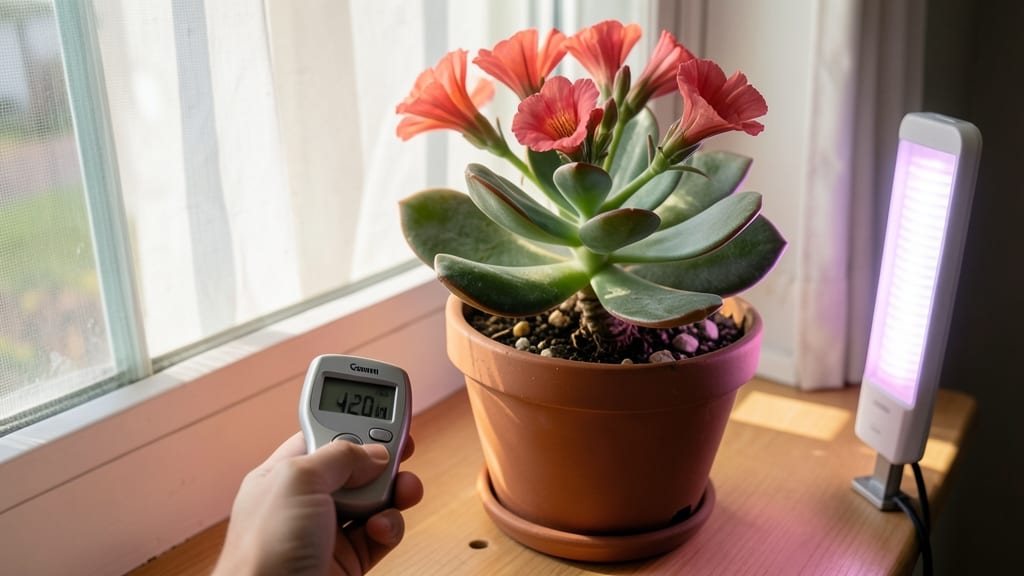
If you’re wondering how much light does a Kalanchoe plant need to stay healthy and vibrant, you’re not alone. This succulent thrives in bright conditions, but getting the balance right is the key to keeping it strong and blooming.
Too little light, and it grows leggy and weak; too much, and those pretty leaves can scorch. Let’s figure out exactly how much light your Kalanchoe needs to stay vibrant and strong.
The ideal spot for your Kalanchoe is near a window where it gets 6-8 hours of bright, indirect light daily. East or west-facing windows are perfect because they offer gentle morning or afternoon sun without the harsh midday rays.
If you notice your plant leaning or stretching, it’s begging for more light—just don’t place it in direct afternoon sun, which can cause leaf damage.
Indoor growers often struggle with this balance, especially in dimmer spaces. A simple trick is rotating your plant every few days to ensure even growth, or using a grow light for 12-14 hours a day if natural light falls short.
Watch for signs like pale leaves or crispy edges—they’re your plant’s way of saying, “Adjust my light, please!”
Whether you’re a beginner or a seasoned plant parent, mastering the light needs of your Kalanchoe will transform it from a struggling succulent to a showstopper. Let’s dive into the details so you can give your plant the perfect glow it deserves.


Optimal light requirements for kalanchoe: bright indirect vs. direct sun
Kalanchoe plants thrive under bright indirect light, making them perfect for sunny windowsills without harsh afternoon sun. These succulents need 6-8 hours of light daily to maintain their vibrant foliage and encourage blooming.
Without enough light, your plant may stretch toward the nearest source—a sign called etiolation—while too much direct sun can scorch delicate leaves.
For indoor growers, the best placement is 2-3 feet from an east or west-facing window. South-facing windows work too, but you’ll need to shield your kalanchoe from intense afternoon rays between 12 PM and 4 PM using a sheer curtain.
Outdoor plants can handle partial sun, especially in cooler climates, but avoid placing them in full sun during peak summer months.
Here’s how to spot light issues quickly: Underlit plants develop long, leggy stems and pale leaves, while overlit plants show crispy, brown edges or sunburnt patches. The key is balance—think of it like a goldilocks zone for your kalanchoe’s health.
| Light Condition | Ideal Hours/Day | Signs of Stress | Solution |
|---|---|---|---|
| Bright Indirect Light | 6-8 hours | Healthy green leaves, compact growth | East/west window, sheer curtain |
| Low Light | <4 hours | Leggy stems, pale leaves | Move closer to window or add grow light |
| Direct Sun (Afternoon) | >4 hours | Brown leaf edges, wilting | Use sheer curtain or rotate pot |
Seasonal adjustments are crucial. In winter, when daylight shortens, supplement with a LED grow light for 6-8 hours daily to maintain your kalanchoe’s energy levels. I’ve found that a simple 10W LED bulb placed 12 inches above the plant works wonders for preventing winter stretch.
For summer, if your plant starts showing signs of stress, move it to a spot with dappled shade—like under a tree with filtered light.
Outdoor kalanchoes in USDA Zones 9-11 can enjoy morning sun and afternoon shade, but always acclimate them gradually. Start with 1-2 hours of direct sun in the morning, then increase exposure over 7-10 days.
This slow transition helps prevent sunburn and ensures your plant adjusts smoothly to its new environment.
Pro tip: Rotate your kalanchoe quarter-turns weekly to ensure even light exposure on all sides. Uneven lighting causes lopsided growth, where one side becomes darker or more stretched than the other. A simple rotation keeps your plant balanced and bushy, with uniform foliage that’s the envy of any plant collector.
Watch for color changes in your kalanchoe’s leaves—they’re your plant’s way of communicating. Yellowing leaves often signal overwatering in low light, while reddish or purple hues can indicate too much direct sun. Adjust care based on these visual cues, and you’ll keep your kalanchoe thriving year-round.
If you’re unsure about your space’s light levels, try the shadow test: Place a white piece of paper near your plant during the brightest part of the day.
If the shadow is sharp and dark, the light is too intense. If it’s fuzzy or nonexistent, your kalanchoe needs more light. This simple trick saves hours of guesswork!
Remember, kalanchoes are drought-tolerant but light-dependent. When in doubt, err on the side of more light—these plants would rather bask than languish. With the right balance, your kalanchoe will reward you with bold blooms and lush growth for years to come. 🌸
Optimal light requirements for kalanchoe: bright indirect vs. direct sun
Kalanchoe plants thrive with bright indirect light for 6-8 hours daily, making them perfect for sunny windowsills. Unlike sun-loving succulents, they can’t handle harsh afternoon rays—this is why east or west-facing windows work best. South-facing windows? Only if filtered through sheer curtains to avoid leaf burn.
Think of your kalanchoe’s light needs like a goldilocks scenario: too little causes leggy stems and sparse blooms, while too much leads to brown crispy edges. The key is consistent brightness without direct sun exposure during peak hours (11 AM–3 PM).
| Light Condition | Daily Hours | Best Window | Signs of Stress |
|---|---|---|---|
| Bright Indirect | 6-8 hours | East/West | Vibrant blooms, compact growth |
| Direct Sun (Morning) | 2-4 hours | South (with shade) | Sunburn (brown patches) |
| Low Light | <2 hours | North-facing | Leggy stems, no flowers |
Seasonal shifts matter too! In summer, move your kalanchoe further from windows to avoid overheating. In winter, supplement with a grow light 12 inches away for 4-6 hours daily if natural light drops below 4 hours. Rotate the pot weekly to ensure even growth—uneven light causes lopsided plants.
Pro tip: Test your light setup by placing a white piece of paper near the plant. If you can’t read text clearly, the light is too dim. For outdoor growing, use 50% shade cloth during peak sun hours to protect delicate leaves.
Watch for these red flags: Yellowing leaves signal overwatering in low light, while white powdery spots mean it’s getting too much direct sun. Adjust placement immediately—kalanchoes recover faster from light fixes than from watering mistakes!
Remember, consistency is key. Sudden light changes (like moving from a bright windowsill to a dim corner) can shock your plant. Gradually acclimate it over 1-2 weeks to new conditions for stress-free transitions. 🌸