
Plants
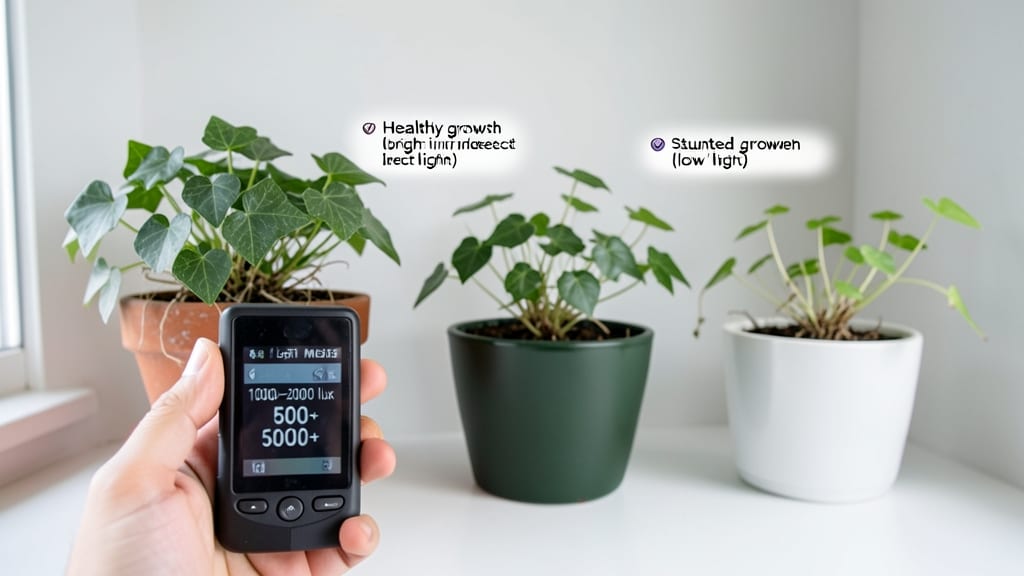
If you’re wondering how much light does an ivy plant need, the answer might be simpler than you think—it’s likely getting the wrong amount. Unlike sun-loving plants, ivy thrives in low to bright indirect conditions, making it perfect for indoor spaces where direct sunlight is limited.
Understanding how much light your ivy needs is the key to keeping it lush and healthy. Whether you're dealing with leggy growth from too little light or crispy leaves from too much, knowing the ideal balance will transform your plant’s appearance in just a few weeks.
From English ivy to Boston ivy, different varieties have slightly varied needs, but they all share one thing: they despise harsh, direct sunlight. I’ll break down exactly where to place your ivy—whether indoors by a north-facing window or outdoors in a shaded garden spot—to ensure it grows strong and vibrant.
Ready to give your ivy the perfect light conditions? Let’s dive into the simple tricks that’ll have your plant thriving in no time.


Ivy plant light requirements: the ideal balance between too little and too much
Ivy plants are famous for thriving in low-light conditions, but that doesn’t mean they can survive in complete darkness. The ideal light spectrum for ivy falls between low to bright indirect light, with 2-4 hours of filtered sunlight daily.
This range keeps their leaves vibrant green while preventing sunburn or leggy growth. Understanding your ivy’s light needs is key to avoiding common pitfalls like yellowing leaves or weak stems.
Most ivy varieties, including English ivy (Hedera helix) and Boston ivy (Parthenocissus tricuspidata), are adaptable but perform best in partial shade. Direct sunlight can scorch their delicate foliage, while too little light slows growth and dulls color.
The secret lies in finding that sweet spot of indirect brightness, especially for indoor plants.
Outdoor ivy plants often grow near north-facing walls or under deciduous trees, where they receive dappled sunlight. Indoors, a north-facing window is ideal, but east or west-facing spots with sheer curtains also work. Avoid placing ivy in south-facing windows without protection, as harsh afternoon sun can damage leaves.
Here’s how to match your ivy’s light needs to its variety and environment:
Ivy’s photosynthesis efficiency peaks in bright indirect light, where it can produce enough energy for steady growth without overheating. In lower light, its leaves may stretch toward light sources—a sign it’s reaching for more energy.
This leggy growth is a clear indicator your ivy needs slightly brighter conditions, even if it’s still alive.
For outdoor ivy plants, seasonal light changes matter. In summer, dappled shade from tree canopies mimics the filtered sunlight ivy loves. In winter, evergreen trees provide year-round shelter from harsh winds and intense sun.
If your ivy is growing on a wall or trellis, ensure it has a mix of shade and morning sun to prevent leaf scorch.
Indoor ivy often struggles in dimly lit rooms like bathrooms or basements, where natural light is scarce. If this describes your space, supplement with a grow light for 4-6 hours daily.
LED grow lights designed for houseplants are energy-efficient and mimic natural light spectra, helping ivy thrive even in low-light apartments.
One common mistake is assuming all ivy varieties have the same light tolerance. Boston ivy, for example, handles slightly more light than English ivy and can tolerate brief periods of direct sun, especially when established.
Meanwhile, Swedish ivy is the most forgiving in low-light conditions, making it perfect for offices or hallways.
To test if your ivy’s light conditions are ideal, observe its leaf color and growth pattern over 2-3 weeks. Healthy ivy should have deep green leaves with a slight sheen and a steady growth rate of 1-2 inches per week.
If leaves turn pale or yellow, it’s getting too much light; if they darken or grow slowly, it needs more brightness.
Pro tip: Rotate your ivy plant quarter-turns every 2 weeks to ensure even light exposure. This prevents one side from becoming leggy while the other stays compact. For outdoor ivy, prune back any sunburned leaves in late summer to encourage new, healthy growth as days shorten.
Ivy plant light requirements: the ideal balance between too little and too much
Ivy plants are famously adaptable, but their light needs are often misunderstood. While they tolerate low-light conditions, they truly thrive in bright indirect light. This means placing them near a window with filtered sunlight—like a north-facing one—or under a sheer curtain.
The key is avoiding harsh, direct sun, which can scorch their delicate leaves. Think of it as giving them morning sun with afternoon shade.
Most ivy varieties, including English ivy and Boston ivy, perform best with 2-4 hours of indirect light daily. This range keeps their foliage vibrant and encourages healthy growth without stress. If you notice your ivy stretching toward the light or developing pale leaves, it’s craving more brightness.
Conversely, too much direct sun can cause brown patches or crispy edges—a clear sign of over-exposure.
Here’s how to visualize the perfect light setup for your ivy:
For outdoor ivy plants, like those climbing a trellis or covering a fence, aim for dappled shade—think of the light filtering through tree canopies. If your ivy is planted in a shady garden spot, it will survive but may grow slower and produce fewer leaves.
Rotate your plant occasionally to ensure even light exposure, which prevents one-sided growth and keeps the foliage lush.
One common mistake is assuming all ivy varieties have identical light needs. While English ivy and Boston ivy share similar preferences, some variegated types (like those with white or yellow foliage) need slightly more light to maintain their coloration.
These varieties often require 3-4 hours of indirect light to prevent the green parts from dominating and dulling their patterns.
If you’re growing ivy indoors, consider supplementing natural light with a grow light during winter months when days are shorter. A simple LED grow bulb placed 12-18 inches above the plant can provide the extra brightness needed to keep your ivy thriving.
Just remember: ivy doesn’t need intense light—it just craves consistency. A steady, gentle glow is far better than sporadic bursts of bright sunlight.
Pro tip: Observe your ivy’s leaves for subtle cues. Healthy ivy leaves are deep green and slightly waxy, while stressed leaves may appear dull or develop yellowing edges.
By tuning into these signals, you’ll quickly learn whether your plant needs more light, less light, or just a better spot to stretch out its vines. 🌿