
Trees
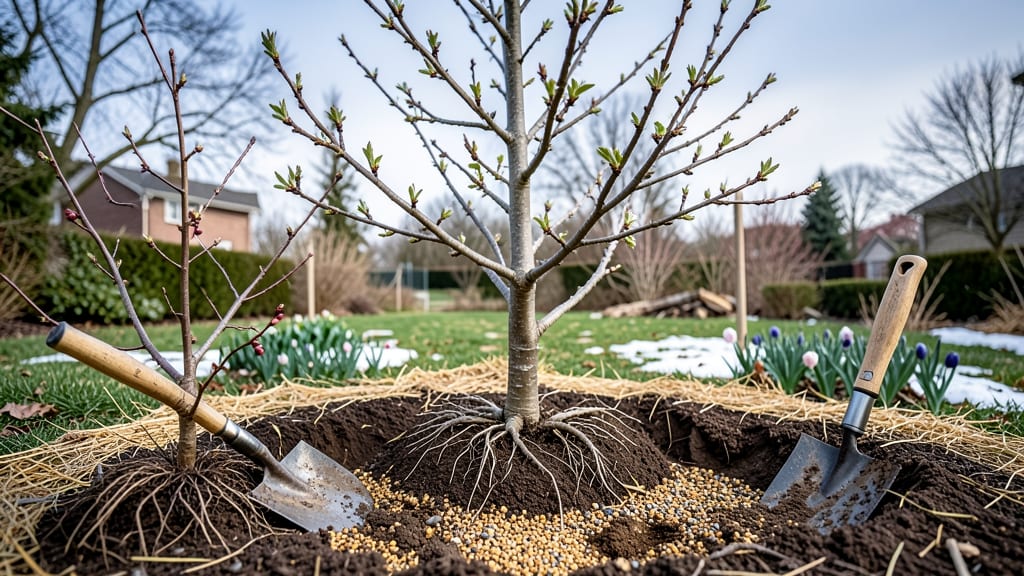
Planting fruit trees in Wisconsin isn’t just about grabbing a shovel in spring—it’s about nailing the chill hours and last-frost dates that make or break your harvest. 🍎 With zones ranging from 4a to 6b, timing matters more than you’d think, especially when Lake Michigan’s microclimates can shift frost patterns overnight.
You’ve probably heard “spring planting” but never stopped to ask: Which spring? Is it the first thaw in March, or the safer bet in April after the last frost?
The answer depends on whether you’re planting bare-root saplings or container-grown trees—and whether your backyard sits in the frosty north or the milder southern reaches.
Here’s the game-changer: Apples and cherries need 800-1,000 chill hours, while peaches thrive with fewer. We’ll break down exactly when to plant in each zone, so you avoid the heartbreak of a late frost wiping out your 3-year investment before it even bears fruit.
Ready to turn your Wisconsin yard into a fruit orchard? Let’s dive into the zone-specific planting windows that’ll have your trees thriving—and your pantry stocked—by next summer.
Wisconsin fruit tree planting dates by hardiness zone (chill hours & last frost)
Planting fruit trees in Wisconsin requires more than just picking a month—you need to match chill hours with your USDA zone and last-frost dates.
Wisconsin spans zones 3a to 5b, where northern regions (like Door County) need 1,000+ chill hours, while southern zones (like Milwaukee) thrive with 600-800 chill hours. Get this wrong, and your apple trees might bloom too early, risking frost damage.
Most Wisconsin gardeners plant in early spring (March-April) or early fall (September-October).
Spring planting gives roots time to establish before summer heat, while fall planting (for container-grown trees) avoids winter stress. Bare-root trees must go in when soil thaws but before buds swell—usually late March to early April in most zones.
Here’s the key: Last frost dates vary wildly. Northern Wisconsin (zone 3a) averages May 20-30, while southern Wisconsin (zone 5b) sees frost-free conditions by May 5-15.
Plant too early, and a late frost could kill tender new shoots. Wait too long, and your tree won’t establish roots before summer drought sets in.
🌱
| Zone | Avg. Last Frost | Chill Hours Needed | Best Planting Window | Top Varieties |
|---|---|---|---|---|
| 3a (Northern WI) | May 20-30 | 1,000+ | Late April-May (bare-root) or Sept (containers) | Honeycrisp Apple, Montmorency Cherry |
| 4a (Central WI) | May 5-15 | 800-1,000 | Early April-May or Sept-Oct | Gala Apple, Harvester Pear |
| 5a (Southern WI) | April 25-May 5 | 600-800 | March-April or Sept | Fuji Apple, Starking Delicious |
| 5b (Southeast WI) | April 15-25 | 500-700 | March-April or Sept-Oct | Peaches, Plums, Dwarf Apples |
For peach trees, which need 400-600 chill hours, zone 5b is ideal. But in zone 4a, opt for late-blooming varieties like Redhaven peaches to avoid spring frost. Cherry trees (especially sour cherries) thrive in cooler zones with 1,000+ chill hours, making them perfect for northern Wisconsin.
Pro tip: Use a soil thermometer—roots won’t grow well in soil colder than 45°F. In zone 3a, wait until soil reaches this temp before planting. Container-grown trees can handle slightly cooler soil, giving you a 2-3 week head start over bare-root options.
If you’re in zone 5b, you can push planting to late February for container trees, but avoid it in colder zones—frozen roots are a recipe for failure. Fall planting (September-October) works best for container trees, as roots establish before winter dormancy.
🌿
Microclimates matter: Lake Michigan’s influence means Door County stays cooler longer than Milwaukee. Check local Cooperative Extension data for your exact last-frost date. For example, Madison (zone 5a) averages frost until May 10, while Green Bay (zone 4b) can see frost until May 25.
Finally, avoid planting in frost pockets—low-lying areas where cold air settles. Plant on south-facing slopes or near stone walls to trap heat. Windbreaks also help protect young trees
How to adjust planting timing for Wisconsin’s unpredictable weather patterns
Wisconsin’s late spring frosts and early fall freezes can devastate young fruit trees if you plant at the wrong time. The key is soil temperature—never plant when the ground is frozen or waterlogged.
Use a soil thermometer (aim for 40°F+) to confirm readiness, especially in Zone 4a areas like northern Wisconsin.
For bare-root trees, early spring (March-April) gives roots time to establish before summer heat. In Zone 5b (southern WI), you can extend planting into late April, but monitor last-frost dates—some years, frost lingers until mid-May near Lake Michigan.
Frost Risk: Even after buds swell, a late frost can kill blossoms. Plant late-blooming varieties (e.g., Honeycrisp apples) in Zone 4a to avoid spring frost damage. Use frost cloth for the first 2 weeks if planting in Zone 4b-5a during early spring.
If you miss spring, early fall planting (September-October) works for container-grown trees, but stop by mid-October—roots need 6-8 weeks to establish before winter. In northern WI, aim for September to avoid early freezes.
For Zone 5b, October is safer, but avoid planting after first frost (usually mid-October).
Microclimates matter: South-facing slopes warm faster than shaded areas. Plant near south-facing walls or stone borders to create a warmer microclimate for frost-sensitive trees like peaches (400+ chill hours). Avoid low-lying spots where cold air pools—these can delay spring planting by 2-3 weeks.
For high-risk areas (e.g., Zone 4a), consider container growing: Move potted trees indoors or to a garage during late frosts, then return them to the garden after May 15. Use black plastic mulch in spring to warm soil 2-3°F faster than bare ground, accelerating root growth.
Always have a backup plan: If a late frost hits, cover young trees with burlap wraps or frost blankets for 3-5 days.
For cherry trees (which bloom early), plant Montmorency (a late-blooming variety) in Zone 4a—it tolerates 500+ chill hours and blooms 2 weeks later than standard varieties.