
Plants
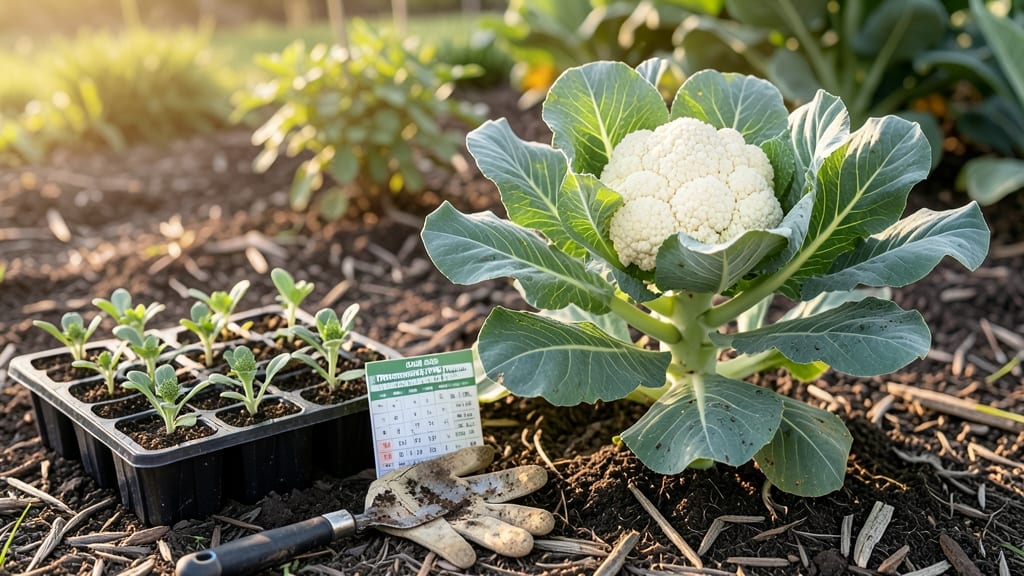
Timing your cauliflower planting in Ohio isn’t just about throwing seeds in the dirt—it’s the difference between a bountiful harvest and a sad, wilted 🥬.
With Ohio’s 6a climate and unpredictable frost dates, getting the window right means avoiding both early freezes and scorching summer heat that can ruin your crop before it even forms.
Most gardeners here focus on two key windows: spring (March 15–April 30) and fall (August 1–September 15), but the real magic happens in the 4-6 weeks before your last frost date.
Whether you’re starting seeds indoors or sowing directly, this guide breaks down exactly when to plant for Ohio’s short growing season—so you can enjoy crisp, homegrown heads from June to November.
I’ll walk you through the best varieties for Ohio’s climate, how to adjust for your specific region (because Toledo’s frost dates aren’t the same as Columbus’), and even how to stretch your season with row covers. No more guessing—just a foolproof schedule to turn your garden into a cauliflower powerhouse.
Ready to skip the trial-and-error? Let’s dive into the exact planting dates, soil prep tips, and frost-proof strategies that’ll have your 🥬 thriving—no matter where you are in the state.
Ohio cauliflower planting dates by region: avoid frost & heat risks
Ohio’s frost dates vary dramatically by region, making timing the difference between a thriving crop and a failed harvest. The Northwest and Northeast zones often see frost until April 20, while the Southeast and Southwest can push back to April 10.
Central Ohio typically falls around April 15, the state’s average last-frost date.
Cauliflower is a cool-season crop that bolts (goes to seed) in summer heat above 80°F. Plant too early, and frost will kill tender seedlings; too late, and your heads will turn bitter or split.
My strategy? Two planting windows: spring (March–April) and fall (August–September) for Ohio’s 165 frost-free days.
For precision planning, use Ohio State University’s frost-date calculator (available on their Extension website). Input your ZIP code to get localized last-frost averages. For example, Toledo’s April 18 last-frost date means I start seeds indoors by March 15 for transplanting by April 15.
Here’s how Ohio’s five microclimates break down for cauliflower planting:
| Region | Last Frost Date | Transplant Window | Fall Planting Deadline |
|---|---|---|---|
| Northwest (Toledo) | April 18 | April 15–May 1 | September 1 |
| Northeast (Cleveland) | April 20 | April 20–May 5 | August 31 |
| Central (Columbus) | April 15 | April 1–April 15 | September 10 |
| Southeast (Athens) | April 10 | March 25–April 10 | September 15 |
| Southwest (Cincinnati) | April 12 | April 1–April 15 | September 12 |
The Southeast gets the earliest start, while the Northeast must wait longer. If you’re in Central Ohio, aim for April 1–15 for spring transplants. For fall, count back 100–120 days from your first frost date (typically October 20) to determine your last planting window.
Pro tip: Use row covers or cold frames to extend your season by 2–3 weeks in spring or fall. I’ve added 14 extra days to my harvest by using floating row covers after transplanting in early April.
Ohio’s summer heat (June–August) is the biggest threat to cauliflower. If you miss the spring window, focus on shade cloth or succession planting in late summer for a fall harvest. Varieties like ‘Snowball Y Improved’ tolerate heat better than ‘Purple of Sicily’, but even they struggle above 85°F.
For direct sowing (skipping the indoor start), wait until soil temps reach 40°F and frost risk is low. In Ohio, this is typically mid-April for most regions. Direct-sown cauliflower takes 75–80 days to mature, so time it for a June harvest before bolting.
Remember: Soil temperature matters more than air temperature. Use a soil thermometer to confirm 40–50°F before planting. Cold soil slows germination, leading to uneven stands or damping off (a fungal disease that kills seedlings).
My top mistake? Planting cauliflower too early in Central Ohio and losing seedlings to late-March frosts. Now, I cross-check the National Weather Service’s 30-year frost averages with my local Extension office’s recommendations. It’s the only way to avoid frost damage while maximizing your 165 frost-free days
Step-by-step cauliflower planting schedule for Ohio’s short growing season
Ohio’s short growing season means timing is everything for cauliflower. Start with indoor seed-starting 4-6 weeks before your last frost date—typically mid-March to early April—to give seedlings a head start. My favorite trick? Use grow lights for 12-14 hours daily to prevent leggy seedlings.
Once seedlings have 3-4 true leaves (about 4-6 weeks), they’re ready for outdoor hardening. Harden off plants by placing them outside for 2-3 hours daily, gradually increasing exposure. This toughens seedlings so they survive Ohio’s temperature swings after transplanting.
📅 Ohio Cauliflower Planting Timeline
Transplant seedlings 18–24 inches apart in full sun (6+ hours daily) with well-draining soil amended with compost. Ohio’s clay-heavy soils? Mix in sand or peat moss to improve drainage—cauliflower hates soggy roots. My go-to soil mix is 50% garden soil, 30% compost, 20% perlite.
For fall harvests, start a second batch of seeds in early August to transplant by mid-September. Use row covers in late September to extend the season—just remove them during the day to prevent overheating. This trick adds 2-3 extra weeks of growing time before frost.
Watch for yellowing leaves or bolting (premature flowering), which signal stress from heat or poor soil. Mulch with straw or shredded leaves to keep roots cool and retain moisture. In Ohio’s summer heat, shade cloth (30-50%) can save struggling plants.
Harvest when heads reach 6–8 inches wide and feel firm to the touch. Cut the entire head 1–2 inches above the base with a sharp knife. For continuous harvests, plant succession batches every 2 weeks