
Plants
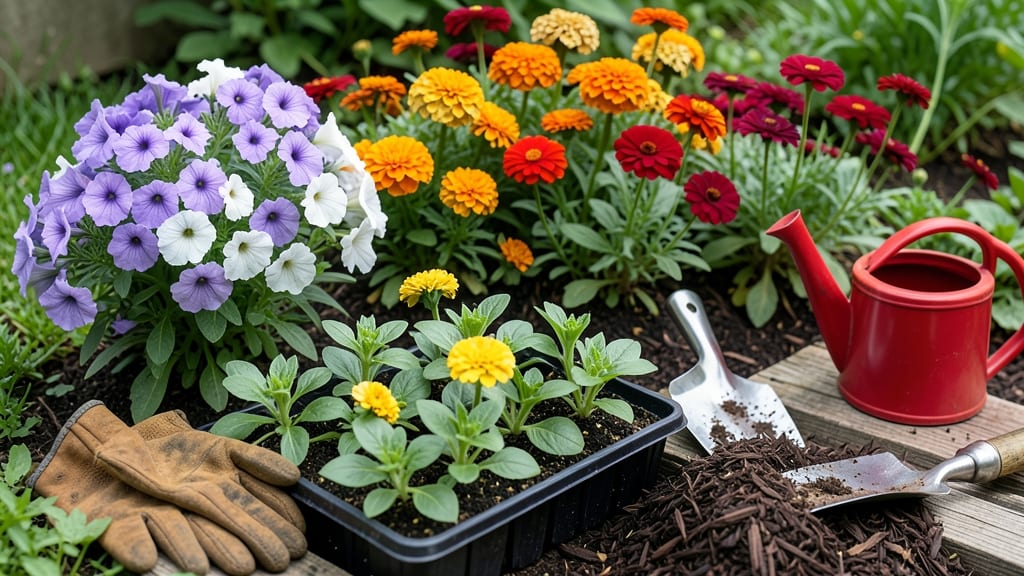
Timing your annuals planting in Michigan can mean the difference between a showstopping garden and a sad, frost-bitten disappointment—especially in USDA Zones 5b-6b where those last frosts strike unpredictably.
You’ve got to play by Mother Nature’s rules, but with the right schedule, you can outsmart those chilly surprises and enjoy vibrant blooms from spring to fall.
I’ve cracked the code after years of Michigan gardening trials (and a few too many wilted marigolds). The secret? Planting at the perfect moment when soil warms up and danger of frost fades—but not so late that summer’s heat zaps your seedlings.
Whether you’re dreaming of bold zinnias or delicate impatiens, this guide gives you the exact windows to plant for maximum impact.
We’ll break down the science-backed calendar for cool-season and heat-loving annuals, plus pro tips to extend your growing season with row covers and succession planting. No more guessing—just confident, foolproof timing that’ll have your neighbors asking for your secrets.
Ready to transform your Michigan garden into a year-round paradise? Let’s dive into the planting schedule that actually works for our Great Lakes climate—and keep those annuals thriving until the first snowflakes fly.
Michigan annual planting calendar by last frost dates (Zone 5b-6b guide)
Michigan’s last spring frost dates vary dramatically—from mid-April in southern regions like Detroit to late May in northern areas like Traverse City. For USDA Zones 5b-6b, I’ve mapped out the optimal planting windows for both cool-season annuals (like pansies and lettuce) and warm-season favorites (petunias, marigolds, and tomatoes).
Timing is everything, especially when Michigan’s first fall frost can arrive as early as September in northern zones.
To avoid frost damage, I recommend using the Michigan State University Extension’s frost date calculator for your specific location. Most of the state’s average last frost dates fall between May 10–20, but microclimates near lakes or urban areas can push this 2–3 weeks earlier.
For cool-season annuals, I start sowing seeds indoors 6–8 weeks before the last frost, while warm-season varieties need soil temperatures above 55°F to thrive.
Here’s my foolproof planting schedule broken down by month, including seed-starting dates and transplanting windows for Michigan’s most popular annuals:
| Planting Window | Cool-Season Annuals | Warm-Season Annuals | Notes |
|---|---|---|---|
| March | Start pansies, snapdragons, lettuce indoors | — | Use grow lights; keep temps 60–65°F |
| April | Direct-sow spinach, radishes, peas outdoors | Start tomatoes, peppers, petunias indoors | Cover seeds with row fabric if frost threatens |
| May | Transplant cool-season starts after last frost | Hardening off warm-season seedlings (start 2 weeks before transplant) | Soil temp must be 55°F+ for warm-season plants |
| June | Direct-sow bush beans, cucumbers, zucchini | Transplant petunias, marigolds, zinnias after May 20 | Mulch to retain moisture and warmth |
| July–August | — | Sow cosmos, sunflowers, nasturtiums for late-season color | Ideal for succession planting to extend blooms |
| September | Direct-sow kale, spinach, radishes for fall harvest | Transplant mums, asters, pansies for fall color | Use row covers to delay frost |
For northern Michigan (Zone 5b), hold off on warm-season transplants until after May 25 to avoid frost. In southern Michigan (Zone 6b), you can start 2 weeks earlier.
Pro tip: I always test soil temperature with a soil thermometer—warm-season plants like tomatoes won’t germinate below 60°F.
If you’re planting heat-loving annuals like lantana or portulaca, wait until June 1 to give them a head start against Michigan’s short growing season. These varieties thrive in full sun and drought-like conditions, making them perfect for late-season plantings.
Don’t forget about succession planting! For continuous blooms, I stagger plantings of zinnias and marigolds every 2–3 weeks from June through July. This ensures your garden stays vibrant even as Michigan’s summers wind down.
For fall annuals, I prioritize pansies, sweet alyssum, and calendulas—they tolerate light frosts and add color until Thanksgiving. Just be sure to mulch heavily to protect roots from early frosts.
🌱
How to extend your Michigan growing season for annuals (before & after frost)
Michigan’s short growing season doesn’t mean your annuals have to suffer—with the right strategies, you can enjoy blooms from early spring through late fall. The key lies in protecting tender plants from frost and maximizing warmth when temperatures dip.
I’ve tested these methods in my own Zone 5b garden and seen 4-6 extra weeks of vibrant color!
Start by choosing heat-tolerant varieties like zinnias and marigolds, which thrive when nights stay above 50°F (10°C). For cooler seasons, opt for pansies or snapdragons, which handle light frosts down to 25°F (-4°C). The secret weapon? Succession planting—staggering sowings every 2-3 weeks ensures continuous blooms.
For fall plantings, aim to sow heat-loving annuals by July 1—they’ll establish roots before cooler weather arrives. In my garden, sunflowers and dahlias planted in early July still bloomed through September with minimal care.
Always check soil temperatures (use a soil thermometer): most annuals need 60°F (15°C) minimum to germinate.
Don’t forget microclimates! South-facing walls or black plastic mulch can add 5-10°F of warmth. I’ve even grown tropical-looking cannas in containers near my sunroom—they thrive in partial shade and tolerate brief frosts if protected. The goal? Push your season’s limits without risking plant loss.
Pro tip: Keep a planting journal to track what works in your specific Michigan microclimate. Note which varieties survive early/late frosts and adjust next year’s schedule accordingly. With these tricks, your annuals will outperform expectations—even in our unpredictable climate! 🌿