
Plants
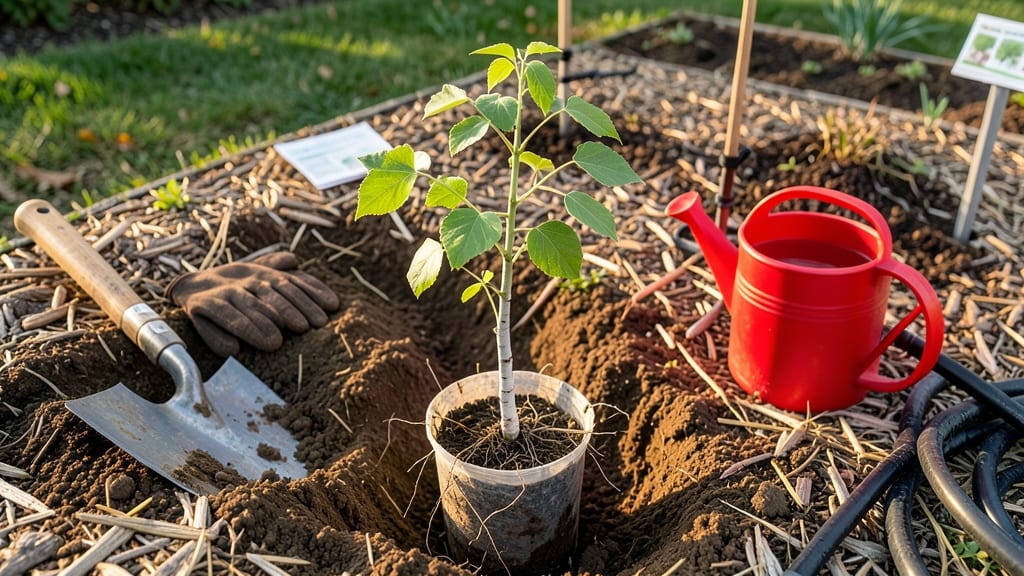
Timing your tree planting in Colorado isn't just about the calendar—it's about survival against 100-degree swings and first frost warnings that can turn a healthy sapling into a sad, frozen stick.
Whether you're planting a 🌳 Colorado blue spruce in Denver or a ponderosa pine near the mountains, getting the window right means the difference between a thriving shade provider and a costly mistake.
Most gardeners know spring and fall are ideal, but Colorado's USDA Zones 5-7 demand precision. Plant too early, and your tree might face frost heave. Too late, and it won't establish roots before winter.
I'll break down the exact frost-free timelines for your elevation—because what works in 5,000-foot Denver fails at 8,000-foot Aspen.
You'll also discover why September-October is often better than spring for bare-root trees, how to spot a "false spring" that tricks even pros, and which native species cheat the system by thriving in staggered planting. Let's get your tree off to the right start—no guesswork, just science-backed timing.
By the end, you'll have a checklist of critical do's and don'ts tailored to your microclimate, plus the confidence to plant knowing you're beating Colorado's most brutal growing-season challenges. Ready to turn your backyard into a long-term forest? Let's dig in.
Colorado’s tree planting zones by elevation: when to plant based on altitude
Colorado’s dramatic elevation changes—from desert lowlands to alpine peaks—create wildly different tree planting windows. At 3,000–5,000 feet (Denver, Colorado Springs), your last frost typically arrives by mid-April, while mountain regions (7,000+ ft) like Estes Park may not thaw until late May or June.
These shifts mean a ponderosa pine in Fort Collins needs a different timeline than a hackberry in Pueblo.
Evergreens like Colorado blue spruce are less flexible—they must establish roots before winter’s first freeze. Deciduous trees (e.g., cottonwood) can handle later spring planting, but their roots still need 4–6 weeks of warm soil to avoid frost heave.
Let’s break down the best planting windows by elevation zone, so you don’t gamble with your sapling’s survival.
🌱 Key Rule: Always plant 6–8 weeks before your area’s first hard frost. Use the USDA Plant Hardiness Zone Map (Zones 5–7 in Colorado) as a starting point, then adjust for microclimates—urban areas warm faster than rural zones.
| Elevation Zone | Last Frost Date | Best Planting Window | Notes |
|---|---|---|---|
| Lowland (3,000–5,000 ft) | Mid-April | March 15–April 15 (spring) or September 15–October 15 (fall) | Soil thaws early; ideal for Russian olive or hackberry. |
| Foothills (5,000–7,000 ft) | Late April–May 1 | April 1–May 15 (spring) or September 1–October 1 (fall) | Watch for false springs; aspen thrives here. |
| Mountain (7,000+ ft) | Late May–June 15 | May 15–June 15 (spring) or August 15–September 1 (fall) | Short growing season; prioritize engelmann spruce or quaking aspen. |
🌡️ Pro Tip: Check your local CoCoRaHS station for frost data—it’s more accurate than zone maps!
Spring planting in Colorado is a race against frost. Aim to get trees in the ground by late April in lowlands or early June in mountains. For container-grown trees, you have slightly more flexibility—they can handle transplanting into warmer soil (60°F+) even if roots aren’t fully established.
But bare-root trees need 4–6 weeks to knit roots to native soil before winter hits.
Fall is your second-best window, but timing is critical. Plant 6–8 weeks before your area’s first hard frost (typically mid-October in lowlands, early October in mountains).
This gives roots time to harden off before winter. Evergreens like Colorado blue spruce are especially vulnerable—plant them early in the fall window to avoid winter desiccation.
🌳 Species-Specific Tip: Deciduous trees (e.g., green ash) can handle later fall planting because they’ve already shed leaves, but evergreens need full root establishment before snow flies. In Zone 5 (northern Colorado), that means no later than September 15.
One common mistake is assuming all of Colorado follows the same timeline. For example, Grand Junction (Zone 6) can plant 2 weeks earlier than Fort Collins (Zone 4). Use the Colorado State University Extension’s frost maps to pinpoint your exact last frost date.
And remember: Urban heat islands (like Denver) can delay frost by 1–2 weeks compared to rural areas.
If you’re planting in high-elevation areas (8,000+ ft), prioritize cold-hardy species like subalpine fir or limber pine. These trees evolved to handle short growing seasons and late frosts.
In contrast, lowland species like Russian olive or saltcedar can’t survive mountain winters—planting them above 6,500 ft is a recipe for failure.
💡 Watering Hack: In d
Critical mistakes to avoid when planting trees in Colorado’s climate
Colorado’s climate is unforgiving for new trees—one wrong move, and your sapling could face frost heave, drought stress, or root rot. I’ve planted dozens of trees here, and these are the costly mistakes I see most often. Avoid them at all costs!
First, planting too early in spring is a recipe for disaster. Even if the ground looks thawed, late frosts can still hit. In Denver (Zone 5), aim for after April 15th—wait until nighttime temps stay above 40°F consistently. Mountain regions need even more patience.
Next, ignoring microclimates leads to poor survival rates. Urban areas like Aurora or Colorado Springs can be 5–10°F warmer than rural spots just miles away. Check your local frost dates—they’re not one-size-fits-all!
Another big error? Skipping soil prep in heavy clay or rocky ground. Colorado’s soil is often poorly draining, and trees like cottonwoods or willows will struggle without amendments. Mix in compost or sand to improve texture before planting.
Colorado’s unpredictable weather can trick you into planting too soon. A warm March or April might fool you, but late frosts often hit in May. Always monitor Almanac frost predictions or use frost-free date calculators for your exact elevation.
Don’t forget watering woes. New trees need deep, infrequent watering, but many gardeners overwater, causing root suffocation. In dry years, young trees may need 20+ gallons weekly—don’t skimp! Use a soaker hose to deliver water slowly.
Finally, choosing the wrong species for your zone is a common downfall. Ponderosa pines love high elevations, while fruit trees struggle above 6,000 ft. Stick to native or adapted species like Colorado blue spruce or serviceberry for reliability.
By avoiding these pitfalls, your trees will establish strong roots and thrive for decades—not just survive. Start with the right timing, prep the soil, and watch your green investment grow! 🌳