
Plants
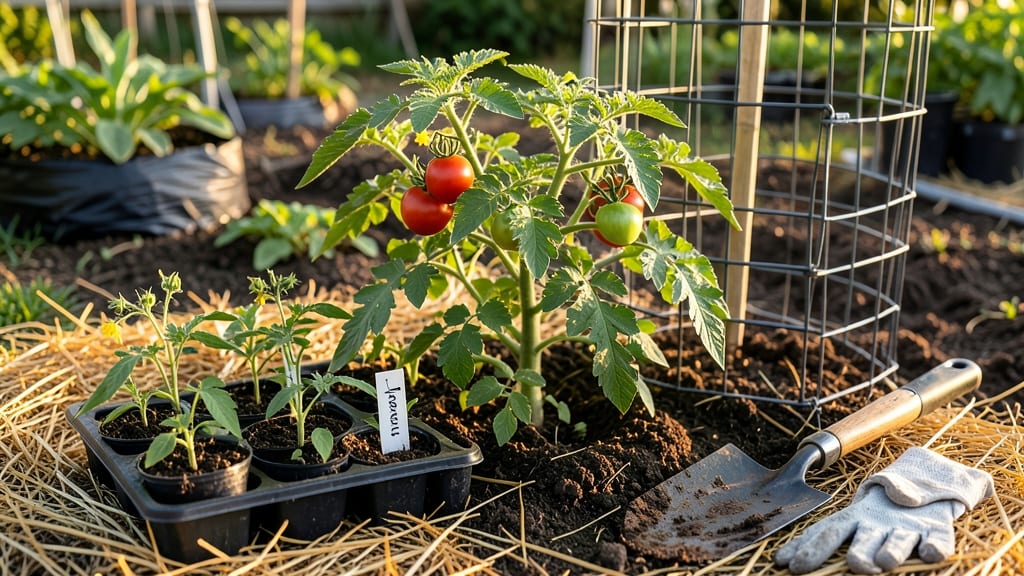
Timing when you should plant tomatoes in Missouri can mean the difference between a bumper crop and a sad, wilted disappointment—especially when you're staring at 165 frost-free days that vary wildly across counties.
Whether you're in St. Louis's USDA Zone 6b or the cooler hills of the Ozarks, getting it wrong could leave your garden struggling through late spring chills or missing the sweet spot for summer harvests.
Most gardeners assume April 15 is the magic date, but that's just the average last frost—Missouri's weather loves throwing curveballs. What you really need is a flexible strategy that accounts for soil temperature (aim for 60°F at 6 inches deep) and your specific microclimate.
I'll show you how to calculate your exact planting window, whether you're starting seeds indoors in March or rushing to get transplants in the ground by May 15.
The good news? Missouri's climate actually works in your favor if you play it smart. Early varieties like 'Early Girl' can give you 60-day harvests when planted just right, while heat-tolerant types like 'Solar Fire' reward patience with 90-day yields through October.
We'll break down which tomatoes thrive in your corner of the state and how to stretch your growing season with simple tricks like black plastic mulch.
Ready to turn your tomato dreams into reality? Let's dive into the county-specific frost data, soil secrets, and planting hacks that'll have your plants flourishing while your neighbors are still waiting for their seeds to sprout.
Missouri county-by-county last frost dates: the critical planting window for tomatoes
Missouri’s last frost dates vary dramatically by region—from early April in southern counties like Stoddard to late May in northern areas like Clay. These dates determine whether you should start tomato seedlings indoors or wait for direct sowing.
The Missouri Botanical Garden tracks historical frost data, but your local USDA Zone 5b-6b also plays a role in refining your schedule.
For most Missouri gardeners, the safe planting window for tomatoes opens 2-3 weeks after the average last frost date. This buffer accounts for late frosts (like the April 2020 freeze that hit St. Louis on April 12) and gives seedlings time to establish roots before summer heat arrives.
Northern Missouri (Zones 5b-6a) typically waits until May 1-15, while southern regions (Zones 6a-6b) can plant as early as April 15-30. The Kansas City metro area (Jackson County) averages a last frost of April 15, but gardeners there often delay until May 1 for extra safety.
🌱 Missouri Last Frost Dates & Tomato Planting Windows
| Region | Avg. Last Frost | Safe Planting Window | County Examples |
|---|---|---|---|
| Northeast | April 25-May 10 | May 15-30 | Clay, Platte, St. Charles |
| Central | April 10-20 | April 30-May 15 | Boone, Cole, Jefferson |
| Southwest | March 25-April 10 | April 15-30 | Dallas, Greene, Webster |
*Source: Missouri Botanical Garden (2023 data) + local extension offices
To find your exact county’s frost date, check the Missouri Climate Center’s interactive map or call your local University of Missouri Extension office. For example, Cape Girardeau (Zone 6b) can plant 2 weeks earlier than Columbia (Zone 6a) due to its milder microclimate near the Mississippi River.
Pro tip: Use black plastic mulch to warm soil 5-10°F faster than bare ground. This lets you plant 1-2 weeks earlier in marginal zones like St. Louis County, where soil may linger below 60°F (the ideal temperature for tomato roots) well into May.
Even after the last frost, monitor nighttime temperatures. Tomatoes under 50°F can suffer blossom drop, while soil below 55°F stunts root growth. A minimum soil thermometer (inserted 6 inches deep) is your best tool for precision planting.
For northern Missouri gardeners (Zones 5b), consider starter plants instead of direct sowing. Seedlings started indoors in March can be transplanted outdoors by May 1, giving them a 2-week head start over seeds sown later. This is especially critical for heirloom varieties with longer maturity dates (85+ days).
Missouri’s first frost typically arrives in mid-October, but some years (like 2014) saw frost as early as October 5. Plan to harvest tomatoes before September 15 in northern regions to avoid cracking from temperature swings. In southern Missouri, you can often extend harvests until October 30.
Remember: Succession planting works for Missouri’s short season. After harvesting your first batch, replace spent plants with fast-maturing varieties like ‘Early Girl’ (60 days) or ‘Celebrity’ (70 days) in late June for a second harvest before frost.
How to adjust tomato planting time for Missouri’s unpredictable weather patterns
Missouri’s weather can be as unpredictable as a tornado warning in spring—one day 60°F sunshine, the next 30°F frost. To beat these swings, I’ve learned to adjust planting times based on soil temperature, not just frost dates.
The key? Soil must stay above 60°F for 2+ weeks before planting—even if the air feels warm. Use a soil thermometer (6 inches deep) to check daily until you hit that magic number.
For northern Missouri (USDA Zone 5b), where late frosts linger, I start seedlings indoors by March 1 and harden them off before transplanting after May 15.
Southern Missouri (Zone 6b) can often plant directly outdoors by April 15, but I still monitor weather forecasts for those sneaky April frost alerts. Pro tip: Black plastic mulch warms soil faster—lay it down 2 weeks before planting to shave off critical growing time.
🌱 Missouri Tomato Planting Adjustments
- 🌡️ Test soil temp daily at 6" depth—wait until it’s consistently 60°F+ for 2 weeks.
- 📅 Use a 2-3 week buffer after last frost dates for transplanting seedlings.
- ☀️ Extend the season with cold frames or row covers if planting early.
- 🌱 Start seeds indoors 6-8 weeks before last frost for northern Missouri.
- 📊 Check Missouri Botanical Garden’s frost maps for county-specific data.
Missouri’s summer heatwaves can also throw off timing. If a 90°F+ stretch hits early, I delay planting until late May to avoid blossom drop—tomatoes need steady temps between 70-85°F to set fruit.
For heat-tolerant varieties like ‘Solar Fire’, I might push planting to June 1 in extreme southern counties, but I always mulch heavily to retain moisture.
Don’t forget succession planting for a continuous harvest! In Missouri, I plant 3 batches of tomatoes: the first after last frost, a second 2 weeks later, and sometimes a third in early June for fall production.
This stretches my harvest from July to October—just in time for Missouri’s famous tomato festivals!
For container gardening, I plant 1-2 weeks later than in-ground tomatoes because pots heat up faster and dry out quicker. Use self-watering containers and place them in partial shade during the hottest afternoons to prevent stress.
And always choose dwarf varieties like ‘Tiny Tim’ for pots—they mature faster in Missouri’s shorter growing season.
My biggest lesson? Trust the soil, not the calendar. Even if your neighbor in the next county plants on April 15, your microclimate might need a 3-week delay.
Keep a gardening journal to track your local patterns—after 3 years, you’ll have a personalized planting schedule that beats Missouri’s weather every time. 🌱