
Companion Plants
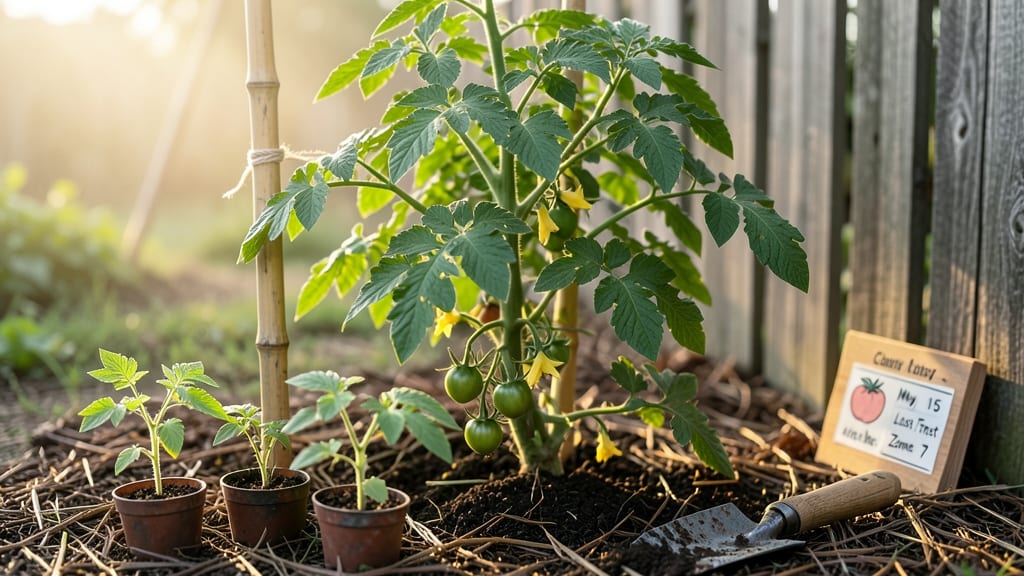
Figuring out when to plant tomatoes in NC can feel like solving a puzzle—one wrong move, and your 🍅 plants might bolt before producing fruit. The key isn’t just avoiding frost; it’s timing the soil warmth and growing season just right for your region.
North Carolina’s climate varies wildly from the coast to the mountains, with last frost dates shifting from early March in Zone 8b to late April in Zone 6a. Without the right strategy, you could end up with stunted plants or a harvest that never comes.
Let me break down the exact windows and soil temps you need to nail your tomato planting.
Whether you’re starting seeds indoors or transplanting seedlings, knowing your local frost dates and soil temperature thresholds is the game-changer. I’ll walk you through the step-by-step math to calculate your perfect planting window—no guesswork, just guaranteed growth.
From Piedmont to the Sandhills, we’ll cover regional adjustments, backup dates, and pro tips to extend your season. Ready to turn your backyard into a tomato powerhouse? Let’s get started.
North Carolina frost dates & soil temperature guide for tomato planting
North Carolina's diverse climate means your tomato planting window can vary dramatically from the Coastal Plain to the Mountains. The key to success lies in understanding two critical factors: last frost dates and soil temperatures.
Tomatoes need soil at 50°F+ to germinate and 60°F+ to thrive, while frost sensitivity determines your safe planting window.
Most of NC falls within USDA Zones 6a-8b, but microclimates can shift your ideal planting date by 2-4 weeks. For example, Asheville (Zone 7b) has a later frost date than Wilmington (Zone 8a), even though they're only 300 miles apart.
Always verify your local frost dates using the NC State Climate Office or Almanac tools.
Here’s how to decode your planting window using soil temperature and frost-free days:
| NC Region | Avg. Last Frost | Soil Temp Threshold | Safe Planting Window | Frost-Free Days |
|---|---|---|---|---|
| Coastal Plain (e.g., Wilmington) | March 15 | 55°F+ (warmer soils) | Mid-March to April 15 | 210-240 days |
| Piedmont (e.g., Raleigh) | April 1 | 60°F+ (standard) | April 15 to May 1 | 180-210 days |
| Mountains (e.g., Asheville) | April 15 | 65°F+ (cooler soils) | May 1 to May 15 | 150-180 days |
| Sandhills (e.g., Fayetteville) | March 22 | 58°F+ (transitional) | Late March to April 10 | 200-220 days |
🌱 Pro Tip: Use a soil thermometer to confirm temps before planting—cooler mornings can fool you!
If you’re planting seedlings (not seeds), wait until 2 weeks after your last frost date to give young plants time to establish roots. For direct-seeding, aim for when soil hits 60°F+ consistently—this usually aligns with 2-3 weeks after last frost in most of NC.
One common mistake? Planting too early based on air temperature alone. Soil stays cold longer than the air, especially in shady or wet areas. Test your soil for 3 consecutive days at the same time (morning is best) to confirm readiness.
Black plastic mulch can warm soil by 5-10°F, letting you plant 2-3 weeks earlier in cooler zones. Just remove it if temps dip below 50°F at night to protect roots.
For early varieties like 'Stupice' or 'Mountain Merit', you can push the envelope by 1-2 weeks using row covers or cold frames. But avoid planting before April 1 in most of NC—even heat-loving tomatoes won’t forgive a late frost.
Remember: Frost dates are averages. Check your local CoCoRaHS station or NC A&T Extension reports for real-time updates. A 5°F dip in April can wipe out seedlings overnight.
Tomato planting calendar by NC region (with backup dates)
North Carolina’s diverse climate means your tomato planting timeline should match your specific region—whether you're in the Coastal Plain, Piedmont, or Mountains. Each area has unique frost patterns and soil warming speeds, so I’ve broken down the ideal planting windows to maximize your harvest.
Remember: soil temperature matters more than air temperature—tomatoes need at least 60°F soil to thrive.
For most of NC, the primary planting window falls between mid-April and early June, but your exact timing depends on your last frost date and microclimate. Coastal areas like Wilmington can start earlier, while the Appalachian Mountains may need to wait until late May.
Always have backup transplant dates in case of unexpected cold snaps—April is unpredictable!
Pro tip: If you’re in Zone 7b or warmer, you can try an early March planting for heat-loving varieties like 'Celebrity' or 'Solar Fire'.
Use row covers to protect seedlings from late frosts. For high-elevation areas, consider container growing—you can move pots to warmer spots when needed.
Don’t forget about succession planting! For a continuous harvest, plant a second batch of fast-maturing varieties (like 'Early Girl', which takes ~55 days) in late May or early June. This works especially well in the Coastal Plain, where the growing season stretches longer.
To adjust for your specific microclimate, note when your neighbors’ plants start flowering—this is a real-time indicator of when it’s safe to plant. And always keep a soil thermometer handy; 60°F is the magic number for happy tomato roots.
If your soil’s still cool, wait it out—rushing leads to stunted growth.
For container gardeners, you can plant 2-3 weeks later than in-ground tomatoes since pots warm up faster. Just ensure your containers are at least 5-gallon size to support strong root systems. Black pots absorb more heat, giving you a slight edge in cooler areas.