
Companion Plants
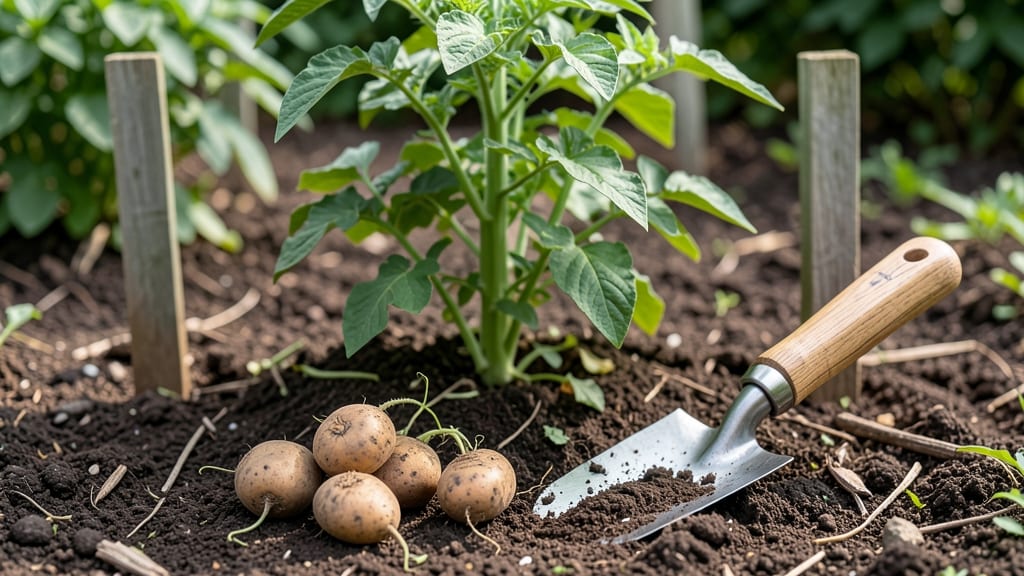
When can I plant potatoes in Zone 5? The answer isn’t just about the calendar—it’s about outsmarting frost with the right timing and tricks. In Zone 5, where last frosts linger around April 15, planting too early can mean lost tubers, while waiting too long cuts your harvest short.
I’ve learned the hard way that soil temperature matters more than dates—aim for 45°F (7°C) or warmer, usually 4–6 weeks before your area’s last frost. Early varieties like Yukon Gold can handle cooler soil, while late-season types need warmer conditions to thrive.
But what if your spring is unpredictable? That’s where microclimate hacks come in. Whether you’re using row covers, black plastic mulch, or a cold frame, you can safely plant 2–3 weeks earlier without frost damage. These strategies turn a risky gamble into a reliable harvest.
Ready to grow more potatoes with fewer frost worries? Let’s break down the exact planting window, variety choices, and season-extending tips that actually work in Zone 5. Your 🥔 harvest will thank you.
Zone 5 potato planting calendar: frost-proof timing for early vs late varieties
Planting potatoes in Zone 5 requires precision—your last frost date (typically April 15) isn’t the only factor. Soil temperature matters more. Aim to plant when soil hits 45°F (7°C), not just when air warms.
Early varieties like ‘Yukon Gold’ can handle cooler soil, while late varieties need 50°F (10°C) minimum for optimal growth.
Zone 5’s unpredictable springs demand a 4-week buffer. Start chitting (pre-sprouting) seed potatoes indoors 6–8 weeks before planting to jumpstart growth. This gives you a 2–3 week head start if frost lingers. For example, if your last frost is April 20, plant by March 20 for early varieties.
Your microclimate plays a huge role. Urban areas like Chicago often warm faster than rural spots due to the “urban heat island” effect. Test soil temperature with a soil thermometer—plant when it consistently reads 45°F+ for 3+ days.
In colder pockets (e.g., Buffalo, NY), wait until May 1 for late varieties to avoid frost damage.
Here’s your Zone 5 potato planting schedule by variety type, including soil temp thresholds and frost risk windows:
Pro tip: Use black plastic mulch to warm soil 5–10°F faster than bare earth. Lay it down 1–2 weeks before planting to create a microclimate that’s 2–3 weeks ahead of the surrounding area. This trick lets you plant early varieties as soon as March 1 in most of Zone 5.
For late varieties, consider succession planting. After harvesting your first crop (e.g., ‘Red Norland’ in June), replant with ‘Yukon Gold’ for a late-summer harvest. Space rows 12–18 inches apart to maximize yield in limited space.
If your spring is unpredictable, use a frost clock (available at garden centers) to track 32°F (0°C) risk. Plant when the clock shows 0% frost risk for the next 2 weeks. This data-driven approach beats guessing.
Remember: Potatoes hate heat. Plant early varieties to avoid summer wilting. If temperatures hit 85°F+ (29°C), foliage may die back prematurely—harvest tubers immediately to prevent green (toxic) skin.
🌱
Microclimate hacks: how to plant potatoes 2–3 weeks earlier without frost damage
Zone 5’s unpredictable springs can leave you scrambling to plant potatoes at the perfect moment. But with the right microclimate tricks, you can safely push your planting window 2–3 weeks earlier without frost damage.
The key? Leveraging heat retention, wind protection, and soil insulation—all while keeping costs low. I’ve tested these methods in my own garden, and they’ve cut my wait time by nearly a month in some years.
Start by choosing a south-facing slope or raised bed, as these areas warm up 3–5°F faster than flat ground. Urban gardeners can exploit heat islands near pavement or buildings, which radiate warmth back to the soil.
Even a simple black plastic mulch can raise soil temperatures by 5–10°F, accelerating sprouting and giving your potatoes a head start.
Here’s how each method stacks up for effectiveness vs. effort—so you can pick the best fit for your garden:
Cold Frame
✅ Extends season by 4–6 weeks
✅ Reusable for other crops
✅ Protects from light frosts (28°F)
Row Covers
✅ Lightweight & portable
✅ Allows 1–2°F warmer soil
✅ Easy to remove for pollination
Black Plastic Mulch
✅ Warms soil 5–10°F faster
✅ Suppresses weeds
✅ One-time cost (~$10/100 sqft)
Straw Mulch
✅ Insulates against light frosts
✅ Improves soil structure
✅ Biodegradable
💡 Pro Tip: Combine methods for max protection—e.g., black plastic mulch + row covers = 7–10°F warmer soil!
If you’re planting in early April (a common Zone 5 target), use a cold frame or black plastic mulch to ensure soil stays above 45°F—the minimum for potato sprouting.
For a late-March push, pair straw mulch with a south-facing bed. Always monitor soil temps with a thermometer (available for ~$10) to avoid false starts.
Another game-changer? Chitting your seed potatoes indoors 4–6 weeks before planting. This pre-sprouting trick gives you a 10–14 day head start on growth. Just place whole seed potatoes in a bright, cool spot (55–60°F) and watch for 1-inch sprouts before transplanting.
Just be sure to plant them eyes-up to prevent rot.
Remember: Wind speed can drop soil temps by 10°F overnight, so add a windbreak (like a temporary fence or evergreen hedge) if your garden is exposed. With these hacks, you’ll be harvesting new potatoes by early July—even in frost-prone Zone 5! 🌱