
Watering
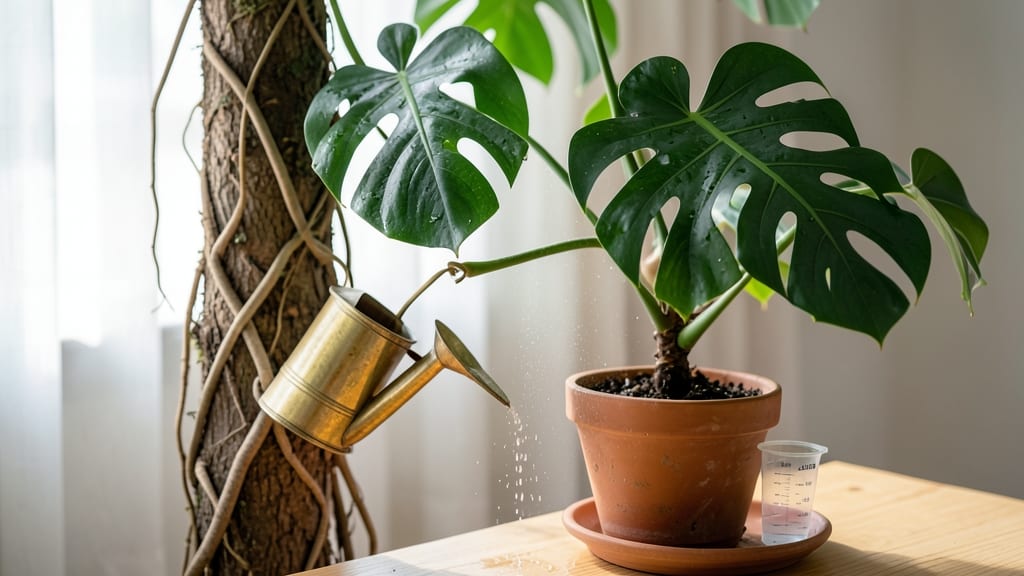
Figuring out how much water a Monstera plant needs can feel like walking through a fog—one day it’s thriving, the next, its leaves look like they’ve been through a sauna.
The truth? Monsteras are finicky about moisture, and getting it wrong (especially overwatering) is the fastest way to turn your leafy giant into a sad, droopy mess.
Here’s the good news: with the right approach, watering your Monstera becomes simple. Think of it like a 3-step rhythm—check the soil, adjust for your home’s humidity, and let the plant tell you when it’s thirsty. No more guessing games, no more root rot disasters.
I’ve learned the hard way that even well-meaning plant parents can drown their Monsteras, so let’s skip the trial-and-error phase and get straight to the science-backed schedule that keeps your 🌿 happy and healthy.
In this guide, you’ll discover the exact watering frequency for your Monstera’s pot size, the finger test that saves plants, and how to spot the subtle signs of over- or underwatering before they become irreversible.
Whether you’re a first-time plant parent or a seasoned grower, these tips will help you master the balance—because your Monstera’s survival depends on it.
Ready to stop the guesswork? Let’s dive into the foolproof watering routine that’ll have your Monstera reaching for the sky in no time—without the drama of wilting or yellow leaves. Trust me, your plant (and your sanity) will thank you.

How often to water Monstera plants: the 3-Zone watering schedule
Your Monstera’s watering needs depend on three key factors: soil type, pot size, and season. Unlike drought-tolerant succulents, Monsteras thrive on a consistent moisture balance—never soggy, never bone-dry.
Think of it like a tropical rainforest: frequent but well-drained showers, not standing puddles. I’ve learned this the hard way after my first Monstera’s leaves turned yellow from overzealous watering!
For most indoor Monsteras in 6-inch pots, aim to water every 7-10 days during spring/fall. But this changes dramatically in summer (every 5-7 days) or winter (every 10-14 days). The secret? Check soil moisture before watering—never rely on a rigid schedule.
Your finger is the best tool: stick it 1-2 inches deep into the soil. If it feels dry, it’s time to water.
Here’s the game-changer: Zone-based watering. Divide your care into three zones—soil, environment, and plant signals—to create a foolproof system. For example, Monsteras in terracotta pots dry out faster than those in ceramic, while humid climates (like bathrooms) reduce watering frequency.
Let’s break it down with a clear schedule you can trust.
Let’s tackle the biggest myth: “Monsteras need lots of water.” False! In fact, overwatering causes 80% of Monstera deaths—root rot sets in within 3-5 days of soggy soil. I once saw a Monstera’s stem turn black and mushy after just two weeks of daily watering.
The fix? Drainage holes are non-negotiable, and bottom watering (placing the pot in a tray of water for 10-15 minutes) gives roots control over hydration.
For visual learners, here’s how to spot the right moisture level: Dry soil should look like a slightly crumbly cake mix—not powdery (too dry) or clumpy (too wet).
Pro tip: If you’re unsure, underwater slightly—Monsteras bounce back faster from thirst than from drowning. And always water in the morning to let excess moisture evaporate during the day.
What about self-watering pots? They’re a game-changer for busy plant parents! These pots use a reservoir system to deliver consistent moisture without the risk of overwatering. I’ve had great success with Lechuza pots—they keep my Monsteras thriving even when I travel for a week.
Just refill the reservoir every 2-3 weeks, and your plant gets a steady drink.
One final rule: Never water on a schedule. Instead, observe your plant. Is it growing new leaves? That’s a sign it’s happy and hydrated. Are the leaves curling? Time to check the soil.
Monsteras are forgiving, but they’ll scream when something’s wrong—usually through yellowing leaves or drooping vines. Pay attention, and you’ll build an instinct for when it’s thirsty.
Ready to put this into action? Grab a small notepad and track your Monstera’s watering for a month. Note the date, soil moisture level, and any leaf changes. You’ll quickly learn your plant’s unique rhythm. Trust me, your Monstera will reward you with
Best watering methods for Monsteras: drip vs. bottom watering vs. self-watering pots
Not all watering methods are created equal when it comes to your Monstera plant. The way you water can mean the difference between a thriving vine and one struggling with root rot or dry edges.
Let me walk you through the three most effective techniques—plus when to use each for maximum plant health.
First, let’s address the golden rule: Monsteras hate soggy soil. This tropical beauty prefers its roots to dry out slightly between waterings, but it also doesn’t like thirsting for days. The right method ensures moisture reaches the roots without drowning them, while also maintaining the humidity these plants crave.
Pro Tip: If you live in an urban apartment with dry air, you’ll want to prioritize methods that boost humidity around your plant. This is where technique selection becomes crucial—let’s break it down.
- 🌱 Top Watering (Drip Method): Pour water slowly over the soil until it drains from the bottom. Best for well-draining pots and when you want to mimic natural rainfall. Use in spring/summer when growth is active.
- 🪴 Bottom Watering: Place the pot in a tray of water for 10-15 minutes. Ideal for humidity control and preventing fungal issues. Perfect for urban apartments with dry air or if your Monstera has yellowing leaves from overwatering.
- 🌿 Self-Watering Pots: Useful for travel or inconsistent schedules. These pots have a reservoir that slowly releases moisture—great for bigger Monsteras (6+ inches) that need steady hydration without daily attention.
Now, let’s talk about seasonal adjustments. In summer months, your Monstera will drink more water due to higher evaporation rates. That’s when top watering or self-watering pots shine. Conversely, during winter dormancy, reduce watering frequency and switch to bottom watering to maintain soil moisture without overdoing it.
One common mistake? Watering at night. Morning watering (before 10 AM) is ideal because it allows excess moisture to evaporate during the day, reducing the risk of root rot.
If you must water in the evening, ensure your pot has excellent drainage and avoid letting your Monstera sit in standing water.
For new Monstera owners, I recommend starting with the finger test combined with bottom watering. Stick your finger 1-2 inches into the soil—if it feels dry, it’s time to water. This method gives you the most control and helps you learn your plant’s specific needs over time.