
Plants
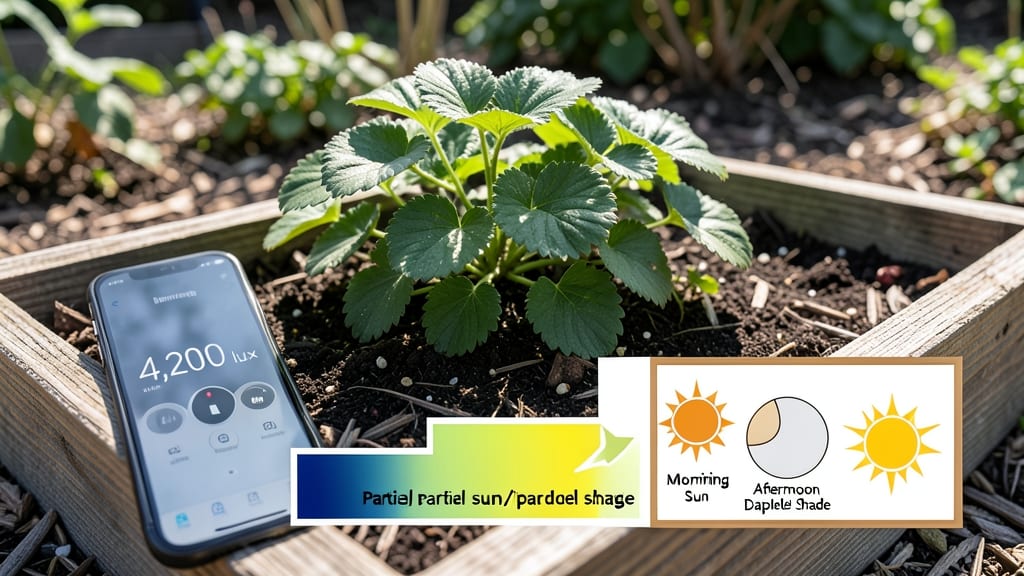
If you're wondering how much light does a strawberry plant need, the answer isn't just about sunshine—it's about the perfect balance that turns those tiny green leaves into sweet, juicy 🍓 berries.
Too little light, and your plants will stretch weak and produce sparse fruit. Too much, and they'll scorch under the midday sun.
Most strawberries thrive with 6 to 8 hours of direct sunlight daily, but not all varieties are created equal. June-bearing types demand full sun, while everbearing and day-neutral varieties can tolerate a bit more shade—especially in hot climates where afternoon sun might be too intense.
The key is understanding how your local climate and plant type interact.
In this guide, I'll break down exactly how much sunlight your strawberries need at each growth stage, from seedlings to fruiting. You'll learn how to spot signs of light stress, adjust care for partial-shade spots, and even maximize growth in containers or indoor setups.
Whether you're a seasoned gardener or just starting with your first 🍓 patch, these insights will help you grow healthier plants and a bigger harvest.
Ready to give your strawberries the ideal light conditions? Let's dive into the details so you can enjoy that first taste of homegrown fruit sooner than you think.


Strawberry plant sunlight requirements: ideal hours by variety
Strawberries thrive under full sun, but not all varieties have the same tolerance for shade. As a rule, your strawberry plants need 6 to 10 hours of direct sunlight daily for peak production.
However, June-bearing, everbearing, and day-neutral varieties each have unique light preferences that can influence your harvest.
For June-bearing strawberries, the most common type, 8 to 10 hours of sunlight is ideal.
These plants produce one massive harvest in early summer, and ample light ensures large, flavorful berries. Everbearing varieties, like 'Ozark Beauty,' can tolerate 6 to 8 hours of sun but still perform best with more light for continuous fruiting.
If you're growing day-neutral strawberries, such as 'Albion' or 'Seascape,' they’re the most adaptable, thriving in 6 to 8 hours of sunlight. These varieties produce fruit throughout the season, making them great for container gardening or partial-shade conditions.
However, even day-neutral types will yield smaller berries if deprived of adequate light.
Here’s how sunlight needs break down by variety and growth stage:
| Variety | Ideal Sunlight | Shade Tolerance | Best For |
|---|---|---|---|
| June-bearing | 8–10 hours | Low (≤6 hrs = poor fruit) | Large harvests, outdoor beds |
| Everbearing | 6–8 hours | Moderate (≤5 hrs = sparse fruit) | Extended harvests, containers |
| Day-neutral | 6–8 hours | Highest (≤4 hrs = stunted growth) | Year-round fruiting, shade gardens |
*Shade tolerance varies by climate—cooler regions may tolerate slightly less sun.
Young strawberry plants in their first year can handle slightly less light (4–6 hours) as they focus on establishing roots. However, second-year plants and those producing fruit need full sun to maximize yield.
If your plants are in partial shade, prioritize the sunniest spot in your garden, even if it means moving them later in the season.
In hot climates, like the Southwestern U.S., afternoon shade can prevent leaf scorch while still providing enough light. Use dappled shade (like from trees) or row covers during peak heat (12–3 PM) to protect plants without sacrificing sunlight.
This is especially critical for June-bearing varieties, which are more sensitive to heat stress.
For container-grown strawberries, place pots in the sunniest location you have, even if it’s a balcony or patio. South-facing windows or areas without obstructions (like nearby buildings) are ideal.
If your space only gets morning sun, rotate containers every few days to ensure even light exposure. Reflective surfaces, like white walls or mirrors, can also bounce extra light onto your plants.
Remember, light quality matters too. Direct sunlight is best, but bright, indirect light (like under a sheer curtain) is better than deep shade. If you’re growing strawberries indoors near a window, ensure they get at least 6 hours of light daily.
Supplement with a grow light if natural light is insufficient, especially in winter months when days are shorter.
🌱
Strawberry plant sunlight requirements: ideal hours by variety
Strawberries thrive in full sun, but not all varieties have the same tolerance for shade. June-bearing types need the most light—6 to 8 hours daily—to produce their single, massive harvest. Everbearing and day-neutral varieties are slightly more flexible, tolerating 4 to 6 hours of sunlight, though they’ll yield fewer berries in lower light.
The key? Balancing sunlight with afternoon shade in hot climates to prevent leaf burn.
Young strawberry plants are especially sensitive to light deprivation. If seedlings or transplants get less than 4 hours of sun, they’ll grow leggy and weak, struggling to establish strong roots. Mature plants can handle partial shade better, but fruit quality suffers—berries become small, pale, and flavorless.
Think of sunlight as the fuel for both leafy growth and fruit production.
Here’s how sunlight needs break down by variety and growth stage:
| Variety | Ideal Sunlight Hours | Minimum for Survival | Best for Fruit Quality |
|---|---|---|---|
| June-Bearing | 6–8 hours | 4 hours | 6+ hours (full sun) |
| Everbearing | 4–6 hours | 3 hours | 5+ hours (partial sun) |
| Day-Neutral | 4–6 hours | 3 hours | 5+ hours (partial sun) |
Seasonal adjustments matter too. In summer’s peak sun, provide afternoon shade (1–3 PM) to protect leaves from scorching, especially in hot climates (Zones 8–10). In winter, everbearing and day-neutral varieties can handle less light since they’re less focused on fruiting.
Use reflective mulch or white gravel around plants to bounce extra light onto foliage if your garden is shady.
For container-grown strawberries, place pots in the sunniest spot you have—even a balcony with 4–6 hours of morning sun works better than 2 hours of afternoon sun. Rotate containers weekly to ensure even light exposure, preventing lopsided growth.
If your space is truly low-light, opt for day-neutral varieties like 'Albion' or 'Seascape', which adapt better to 3–4 hours of sun.
Pro tip: Monitor your strawberries’ leaf color and growth pattern. Dark green, upright leaves mean they’re happy. Pale, stretched-out leaves? It’s time to move them to a sunnier spot.
The goal is consistent, bright light—not scorching heat. A 50% shade cloth can save your plants during heatwaves while still letting in enough light for fruiting.
🌱