
Plants
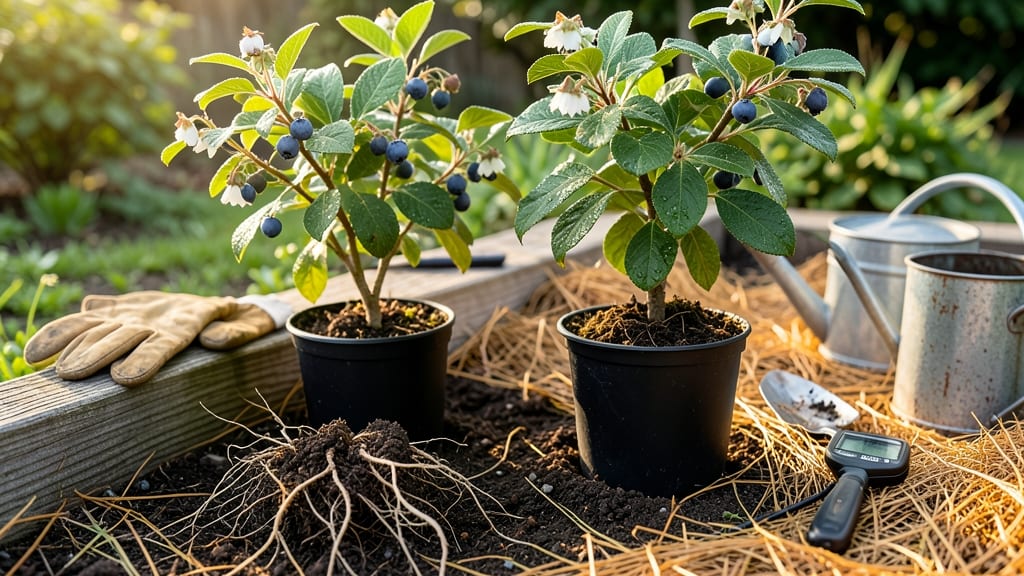
Timing your blueberry 🫐 planting in Colorado isn’t just about the calendar—it’s about matching your local chill hours, frost dates, and soil conditions to give your bushes the best shot at thriving. Get it wrong, and you might end up with stunted growth or no harvest at all.
But nail it, and you’ll be picking sweet, juicy berries in July or August for years to come.
Colorado’s USDA Zones 5-7 mean your planting window depends on where you live—whether you’re in Denver’s Front Range, the high desert of the Western Slope, or the Eastern Plains.
The key is planting after the last frost (typically around April 15, but it varies by elevation) or in early fall before the first frost hits in October.
In this guide, I’ll break down the exact months to plant, how to prep your soil for these acid-loving shrubs, and which blueberry varieties do best in your specific region.
We’ll also cover pro tips to protect your young plants from Colorado’s unpredictable weather—because even the best timing won’t help if a late frost catches them off guard.
Ready to turn your backyard into a blueberry patch? Let’s dive into the perfect planting schedule for your Colorado climate, so you can enjoy homegrown berries without the guesswork.
Colorado chill-hour zones: matching blueberry varieties to your location
Colorado’s diverse climate means chill-hour requirements are critical for blueberry success. Most varieties need 300–900 chill hours (temperatures between 32–45°F) to produce fruit. If you plant the wrong type, you’ll end up with fewer berries—or none at all. Let’s match your location to the perfect variety.
First, identify your USDA hardiness zone (typically 5–7 in Colorado) and elevation. High-elevation areas (like 7,000+ ft) often have longer chill periods but shorter growing seasons. Check the USDA Plant Hardiness Zone Map or your local Cooperative Extension office for precise data.
For example, Northern Highbush varieties (like ‘Bluecrop’ or ‘Duke’) thrive in zones 4–7 and need 700–900 chill hours, ideal for the Front Range. Meanwhile, Southern Highbush (like ‘Premier’) suits zones 6–9 with 300–500 chill hours, perfect for lower-elevation areas like Grand Junction.
Rabbiteye varieties (e.g., ‘Tifblue’) are rare in Colorado but work in southern zones with mild winters. Most gardeners opt for half-high or lowbush types (like ‘Top Hat’) for compact growth and higher chill tolerance.
Here’s how to verify your local chill hours:
- Use a home weather station or check NOAA climate data for your area.
- Call your county extension office—they track chill hours annually.
- For quick estimates, add 100–150 chill hours per 1,000 ft elevation in mountainous regions.
Once you know your chill hours, pick a variety that matches. Mismatched varieties may leaf out early but drop buds before fruiting. For instance, ‘Jersey’ blueberries (500–700 hours) are great for Denver’s 6,000-ft elevation, while ‘Patriot’ (600–800 hours) suits Colorado Springs’ zone 6.
Pro tip: Container-grown blueberries adapt better to microclimates. If your yard has frost pockets, opt for dwarf varieties (like ‘Sunshine Blue’) and move pots to warmer spots in winter.
Now, let’s dive into the best planting windows for your region—after you’ve matched your variety to your chill hours.
| Colorado Region | Avg. Chill Hours | Best Varieties | Planting Notes |
|---|---|---|---|
| Front Range (Denver, Fort Collins) | 700–900 | Bluecrop, Duke, Jersey | Plant in May–June or September; mulch heavily. |
| Western Slope (Grand Junction, Durango) | 500–700 | Premier, Top Hat, Sunshine Blue | Avoid late spring frosts; use row covers. |
| Eastern Plains (Colorado Springs, Pueblo) | 600–800 | Patriot, Legacy, Bluegold | Amend alkaline soil with sulfur; water deeply. |
| High Elevation (7,000+ ft) | 900–1,100 | Earliblue, Northblue, Lowbush | Plant in containers for flexibility; extend season with cloches. |
With your variety selected and chill hours confirmed, you’re ready to tackle the next step: frost-free planting timing. Colorado’s variable frost dates mean spring planting can be risky, but fall offers a safer window for most regions.
For high-elevation areas, consider container planting to move bushes to sheltered microclimates during late frosts. A south-facing wall or greenhouse can add critical warmth in spring.
Remember: Soil pH is non-negotiable. Colorado’s alkaline soils (pH 7.5–8.5) must be lowered to 4.5–5.5 for blueberries. Test your soil before planting—amendments like peat moss or sulfur take 2–3 months to adjust pH.
Frost-free timing for planting blueberries in Colorado: when to dig in
Colorado’s variable frost dates and high elevations mean timing is everything for blueberry success. Plant too early, and late frosts can damage tender roots. Too late, and your bushes won’t establish strong roots before winter.
The sweet spot? Late spring (May–June) or early fall (September–October), when soil is workable and frost risks are low.
Most Colorado regions experience their last frost between April 15 and May 15, but elevations above 7,000 feet can delay this by 2–4 weeks. Check your local USDA Plant Hardiness Zone (typically 5–7 in Colorado) and monitor Almanac frost predictions for your area.
For example, Denver’s average last frost is April 30, while Grand Junction’s is April 15.
Your Colorado Planting Timeline
- Late Spring (May–June): Ideal for in-ground planting once soil warms to 50°F+. Young roots establish quickly in 60–90 days before winter.
- Early Fall (September–October): Best for container planting or high-elevation areas. Plant 6–8 weeks before first frost to allow root growth.
- Avoid Planting: March–April (risk of late frosts) or November (roots won’t harden before winter).
For high-elevation gardens (7,000+ ft), like those in Summit County or Aspen, shift your window 2–4 weeks later. These areas often see frost until June 1, so aim for June planting or wait until early September.
Use row covers if planting in May to protect young shoots from unexpected cold snaps.
Before planting, amend your soil with peat moss or sulfur to lower the pH to 4.5–5.5—blueberries hate alkaline Colorado soil. Mix in compost for nutrients and improve drainage.
Dig a hole twice as wide as the root ball but only shallow—blueberry roots are shallow and sensitive to deep planting.
Water deeply immediately after planting to eliminate air pockets in the soil. Mulch with pine needles or wood chips to retain moisture and mimic the acidic forest floor blueberries thrive in. In drought-prone areas like the Western Slope, consider drip irrigation to keep roots consistently moist during Colorado’s dry summers.
Remember: Fall planting gives roots a head start on spring growth, while spring planting avoids winter stress. Whichever you choose, protect your bushes from late frosts with frost cloth or a mini greenhouse until they’re established.
With the right timing, your blueberries will reward you with years of sweet harvests! 🫐